
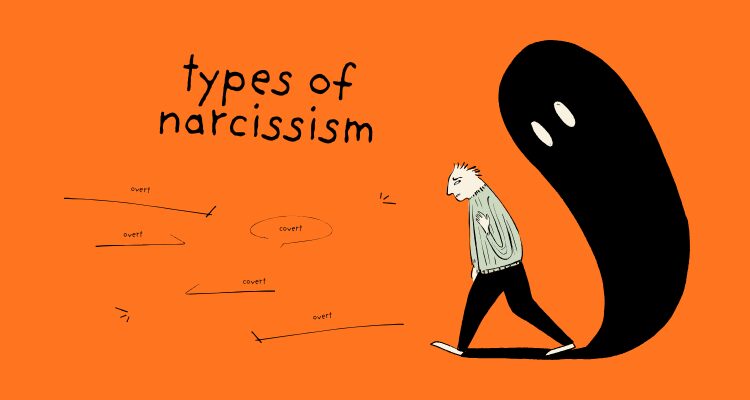
Let me tell you something that might save you years of confusion, self-blame, and sleepless nights wondering what you did wrong: there is no single “type” of narcissist.
I’ve spent years studying personality patterns, working with clients who’ve been burned by narcissistic relationships, and—if I’m being completely honest—untangling my own experiences with people who left me questioning my sanity.
What I’ve learned is that narcissism doesn’t come in one flavor. It’s not always the loud, chest-thumping braggart you see in movies. Sometimes it wears the mask of the wounded healer, the misunderstood artist, the spiritual guru who just gets you in ways no one else ever has.
But here’s the truth: two patterns show up again and again in real life.
The first is what psychologists call Overt narcissism—the obvious, in-your-face variety that most people recognize (eventually).
The second is Covert narcissism—the hidden, insidious kind that can destroy you before you even realize you’re under attack.
Understanding both can literally save your life. Or at least your mental health, your self-esteem, and your ability to trust your own judgment.
This isn’t going to be a clinical textbook. I’m going to walk you through what these patterns actually look like in the wild, share some stories that’ll make your skin crawl (but also help you recognize the red flags), and give you practical tools to protect yourself before it’s too late.
Let’s dive in.
Part One: The Obvious Ones—Overt Narcissists
The Performance of Superiority
Overt narcissists are the ones you can spot from across the room. They’re loud, grandiose, confident, and often incredibly charming in public settings. They walk into a party like they own the place. They dominate conversations. They name-drop. They brag—sometimes subtly, sometimes not—about their achievements, money, looks, connections, or status.
Everything about them screams: “Look at me. Admire me. Tell me I’m special.”
And here’s the thing: it often works. At least at first.
I remember Sarah, a former coaching client who came to me two years into a relationship with Marcus, a successful real estate developer. When they first met at a charity gala, she was mesmerized. Marcus commanded the room. He told stories about closing multi-million dollar deals, dropping names of celebrities he’d worked with, flashing a Rolex that caught the light just right. He was attentive to her that night—intensely attentive. He made her feel like she was the only woman in the room.
“I thought I’d won the lottery,” she told me, her voice flat with the exhaustion of hindsight. “He was successful, confident, and he chose me.”
What Sarah didn’t see—what most people don’t see in the beginning—is that Marcus wasn’t interested in her. He was interested in what she represented. Sarah was beautiful, came from a well-connected family, and worked in arts administration. She had the kind of social capital that made Marcus look even better. She was, in the coldest possible terms, supply.
What Overt Narcissists Actually Want
Let’s be brutally clear about what “narcissistic supply” means. It’s the fuel that feeds their ego. For overt narcissists, supply comes from:
Applause and admiration. They need constant validation that they’re special, superior, the best. This can come from strangers, colleagues, social media followers, romantic partners—anyone who’ll confirm their grandiose self-image.
Power and control. They need to feel they’re dominating something or someone. This isn’t about healthy leadership; it’s about the feeling of being above others.
Visible success. Status symbols matter intensely. The right car, the right neighborhood, the right partner, the right job title. These aren’t just nice-to-haves; they’re essential props in the performance of superiority.
When you’re in a relationship with an overt narcissist, you’re not actually a partner. You’re a prop, a resource, or a mirror. They use you for:
- Status: Having an attractive, accomplished, or well-connected partner makes them look better. You’re arm candy, but for their ego.
- Money and resources: Access to your income, your contacts, your family’s influence, your professional opportunities.
- Power: Someone to control, correct, dominate. Someone who’ll adjust themselves to maintain the narcissist’s comfort.
Typical Traits: What You’ll Actually See
Here’s what overt narcissism looks like when you’re living with it:
1. They need to be the center of attention—always.
Every gathering becomes about them. Every conversation loops back to their experiences, their opinions, their achievements. If you share good news, they’ll either one-up you (“That’s great, but let me tell you about the time I…”) or change the subject entirely.
Marcus, Sarah’s ex, couldn’t stand it when she received recognition at work. When she was promoted to deputy director, he spent the entire celebration dinner talking about a property deal he’d closed that same week. When friends congratulated Sarah, he’d interject with, “Yeah, and I just got approached to develop the waterfront project—they want me specifically because of my track record.”
2. They talk more than they listen.
Genuine curiosity about your inner world? Minimal. They might ask questions, but watch carefully: they’re usually gathering information to use later, not trying to understand you. Or they’re waiting for you to finish so they can redirect attention back to themselves.
3. They humiliate others to feel superior.
This is the part that cuts deep. Overt narcissists will put you down—sometimes publicly, often privately—to maintain their position above you. The putdowns might be disguised as jokes (“Just kidding! Don’t be so sensitive!”) or framed as “honesty” (“I’m just being real with you—someone has to tell you the truth”).
Sarah told me about the time Marcus criticized her body at a dinner party. She’d mentioned she was thinking about signing up for a 10K run, and he laughed and said, “Honey, let’s get you through a 5K first. You’ve put on a few pounds since we met.” Everyone laughed uncomfortably. Sarah wanted to disappear.
4. They’re intensely sensitive to criticism.
This is the paradox: they dish it out constantly, but they cannot take it. Even gentle, constructive feedback will trigger rage, sulking, or counterattack. They might pretend they don’t care—”Whatever, your opinion doesn’t matter to me”—but watch their behavior afterward. They’ll punish you for it.
The Drama of Discovery: When Sarah Finally Saw the Pattern
The turning point for Sarah came eighteen months into the relationship. She’d been offered a prestigious fellowship that required relocating to New York for six months. It was a career-defining opportunity. She was terrified to tell Marcus, but also excited to share the news with someone she loved.
His response: “You’re going to leave me for six months to play academic? That’s pretty selfish, Sarah. What about us? What about what I need?”
No congratulations. No curiosity about the program. No acknowledgment that this was her dream. Just immediate reframing of her achievement as his abandonment.
She turned down the fellowship. She told herself she was being a good partner, prioritizing their relationship. But something had broken inside her. She started paying attention differently.
She noticed that he never asked about her mother’s cancer treatment unless she brought it up. That his “generosity”—the expensive dinners, the surprise gifts—always came right after he’d done something hurtful, as if he could purchase her forgiveness. That he kept detailed mental records of every favor he’d ever done for her, weaponizing them during arguments: “After everything I’ve done for you, this is how you repay me?”
When she finally ended it, Marcus cycled through rage (“You’re making the biggest mistake of your life”), bargaining (“I’ll change, I promise, just give me another chance”), and smear campaign (telling mutual friends she was “unstable” and “ungrateful”).
Classic overt narcissist playbook.
Part Two: The Hidden Ones—Covert Narcissists
The Masquerade of Humility
If overt narcissists are theatrical, covert narcissists are novelistic. They’re not loud; they’re deep. They’re not obviously arrogant; they’re martyrs, misunderstood geniuses, wounded souls carrying burdens too heavy for ordinary people to comprehend.
They present as humble, sensitive, intellectual, spiritual, or perpetually wounded. And this is precisely what makes them so dangerous: you don’t see them coming.
I’m going to tell you about Michael because his story haunts me. Not because he was my client—he was the partner of my client, Jennifer—but because by the time Jennifer came to me, she’d been so thoroughly gaslit that she could barely remember who she’d been before him.
Michael was a yoga instructor and self-described “spiritual guide.” He’d experienced childhood trauma (true) and spent his twenties “healing” and “awakening” (his words). When Jennifer met him at a meditation retreat, she was immediately drawn to his quiet intensity. He wasn’t like the aggressive, domineering men she’d dated before. He listened. He asked deep questions. He seemed to see into her soul.
“He told me I was the first person who truly understood him,” Jennifer said during our first session. “He said everyone else was too superficial, too caught up in materialism and ego. But I was different. I was awake like him.”
Red flag número uno, right there.
The Subtle Machinery of Covert Narcissism
Covert narcissists operate differently than their overt counterparts, but the core mechanism is identical: they believe they’re fundamentally superior to others. The difference is how they express and maintain that superiority.
Typical traits you’ll see:
1. Constant feeling of being overlooked, wronged, or underappreciated.
The covert narcissist lives in a perpetual state of victimhood. They’re the genius who never got the recognition they deserved. The artist whose vision is too advanced for mainstream understanding. The spiritual seeker surrounded by shallow, unconscious people.
Michael constantly talked about how the yoga community “didn’t get” his approach. Studio owners were “too commercial.” Other instructors were “teaching from ego, not spirit.” Students who didn’t book his workshops were “not ready for real transformation.”
Meanwhile, Jennifer noticed that his workshops were poorly attended not because people weren’t “ready,” but because he was often late, disorganized, and would cancel last minute if he “wasn’t feeling the energy.”
2. Victim narratives that hook your empathy.
“No one understands me like you do.”
“Everyone else has abandoned me, but you stayed.”
“I’ve been hurt so many times—I don’t know if I can trust again, but with you, it feels different.”
These statements aren’t just emotional sharing; they’re strategic positioning. The covert narcissist is casting you as the special one, the chosen one, the only person evolved enough to truly see them. This creates intense bonding (what therapists call “trauma bonding” when combined with intermittent reinforcement) and makes you feel uniquely responsible for their wellbeing.
3. Quiet envy disguised as disappointment.
When you succeed, shine, or receive attention, a covert narcissist doesn’t rage like an overt one might. Instead, they withdraw. They become subtly sad. They make comments like:
“That’s great for you. I guess some people just get lucky.”
“Must be nice to have those opportunities. I’ve never had things handed to me.”
“I’m happy for you, but… it’s hard being around success when you’re struggling, you know?”
Jennifer landed a promotion at her nonprofit job—something she’d worked toward for three years. She came home excited, ready to celebrate. Michael’s response: “Congratulations. I’m glad one of us is valued in their work.” Then he spent the evening in “meditation,” refusing dinner, radiating a quiet hurt that Jennifer couldn’t ignore.
By bedtime, she found herself apologizing for being insensitive to his struggles. For her own promotion.
4. Passive-aggressive punishment.
Forget yelling. Covert narcissists control through withdrawal.
The silent treatment. The heavy sighs. The sudden “need for space.” The withholding of warmth, affection, or sexual intimacy. They don’t tell you what’s wrong; they make you work to figure it out, guess at your transgression, and eventually beg for forgiveness for crimes you didn’t commit.
What Covert Narcissists Actually Want
Their supply is subtler but no less essential:
Emotional power: Being the secret center of your world. Not the public star, but the private sun around which your entire emotional life orbits.
Moral power: Being seen as wiser, purer, more enlightened, more conscious than “regular” people. They’re the ones who really understand suffering, spirituality, art, truth.
Psychological power: Knowing your deepnesses, your wounds, your secrets—and using that intimate knowledge to keep you dependent, uncertain, always seeking their approval.
The Slow Erosion: Jennifer’s Story Continues
The thing about covert narcissism is that it doesn’t announce itself with obvious cruelty. It’s death by a thousand cuts.
Jennifer started noticing patterns about eighteen months in:
The double binds. Michael would complain that she worked too much and wasn’t present enough for their relationship. So she’d cut back her hours. Then he’d make comments about her “limited ambition” and how he needed a partner who was “going somewhere in life.”
The moving goalposts. She’d think she’d finally figured out what he needed to feel secure, loved, appreciated. She’d do exactly that. And then it wouldn’t be enough, or it would be the wrong thing, or the timing was off.
The monopoly on pain. Whenever Jennifer tried to express hurt or frustration, Michael would somehow end up being the wounded party. Her upset became about how his trauma made him sensitive. Her needs became evidence of her lack of understanding about what he’d been through.
The breaking point came when Jennifer’s father died suddenly. She was shattered. She needed Michael to just be there—to hold her, to let her grieve, to show up.
Instead, Michael told her he was “triggered by death” because of his own losses and needed to “protect his energy.” He went to stay with a friend for a week. He sent her occasional texts: “Thinking of you. This is hard for me too.” When he returned, he was hurt that she seemed distant.
“I felt like I was going crazy,” Jennifer told me. “My father had just died, and I was comforting him about it. I was apologizing for making him uncomfortable with my grief.”
That’s when she finally reached out for help.
Part Three: The Common Thread—Superiority
Here’s what connects both types, what makes them fundamentally narcissistic regardless of their presentation:
They see themselves as above others!
This isn’t garden-variety confidence or healthy self-esteem. This is a bone-deep belief that they are categorically different from—and better than—regular people.
That superiority can be built on different foundations:
Looks and Physical Attractiveness
“I am more beautiful, more desirable, more genetically blessed. This makes me special and entitles me to special treatment.”
Think of the Instagram influencer who treats service workers like they’re invisible, or the guy who genuinely believes his appearance gives him license to disrespect women who don’t meet his standards.
Intelligence or Education
“I understand what ordinary people never will. I see patterns others miss. I’m operating on a level most people can’t access.”
Michael built his entire identity on this. He was more spiritually advanced, more psychologically aware, more in touch with universal truths. Jennifer was smart—she had a master’s degree—but in Michael’s framing, academic intelligence was shallow compared to his spiritual wisdom.
Role and Status
“I am the leader, the mentor, the boss, the expert, the influencer. My position proves my superiority.”
Marcus, Sarah’s ex, fell squarely here. His success in real estate wasn’t just a career; it was evidence of his inherent superiority. The money, the properties, the deals—these were scorecards proving he was better than other people.
Morality, Faith, or Consciousness
“I am more righteous, more awakened, more conscious, more evolved. I see what others are too asleep to see.”
This is particularly insidious because it wraps narcissism in the language of virtue. The “woke” narcissist who’s more morally pure than you. The religious narcissist who’s closer to God. The political narcissist who’s on the right side of history while you’re part of the problem.
The Internal Logic Is Always the Same
Regardless of what the superiority is built on, the pattern inside the narcissist’s psyche is identical:
“I must stay above you to feel safe. I cannot tolerate equality.”
Equality feels like annihilation to them. If you’re on the same level—if you have equal voice, equal needs, equal right to space and attention—their entire identity structure is threatened.
This is why they cannot do genuine reciprocity. This is why your needs are always somehow unreasonable, while theirs are legitimate. This is why you’re always adjusting, always accommodating, always smaller.
Part Four: The Hunt—How They Choose and Capture Targets
Narcissists aren’t random in their target selection. They’re strategic, whether consciously or instinctively.
The Targeting Process
1. They study your wounds and dreams.
In the early stages, they’re incredibly attentive. They ask questions. They listen (at least it seems like they’re listening—they’re actually collecting data). They want to know:
- What hurt you in the past?
- What do you long for?
- What makes you feel special?
- What are you insecure about?
This isn’t intimacy. It’s reconnaissance.
Sarah had told Marcus early on that her previous boyfriend had cheated on her and made her feel like she wasn’t enough. Marcus positioned himself as her healer: “I would never do that to you. You’re everything I’ve ever wanted. I’m going to show you what real loyalty looks like.”
Jennifer had shared with Michael that she’d always felt like the responsible one in her family, the one who held everything together while feeling invisible. Michael told her: “I see you. Really see you. Not just what you do for others, but who you are.”
2. They mirror your values and thoughts.
In the beginning, the narcissist becomes your perfect match. They love what you love. They value what you value. They’ve had eerily similar experiences. You feel like you’ve found your soulmate, your twin flame, the person who gets you.
This is called mirroring, and it’s a classic manipulation technique.
The narcissist doesn’t have a stable sense of self, so they’re chameleons. They shapeshift to become what you need them to be—at least until they’ve secured you.
3. They gradually test your boundaries.
The tests start small:
- Showing up late and seeing if you complain.
- Making a mildly disrespectful comment and gauging your reaction.
- Asking for a small favor and noting if you comply.
- Violating a minor boundary and checking if you enforce it.
If you pass the test—meaning you don’t enforce boundaries—the violations escalate.
Marcus tested Sarah by canceling their dates last minute a few times early on, always with “work emergencies.” Sarah was understanding (she prided herself on being low-maintenance). Marcus learned: I can deprioritize her and she’ll accept it.
4. They use intermittent reinforcement.
This is the most psychologically damaging part.
After violating your boundaries or treating you poorly, they’ll suddenly shower you with attention, affection, or gifts. You feel relief. You feel like you have “your person” back. Your nervous system calms down.
Then they withdraw again. Then they return. Then they withdraw.
This creates an addiction-like dynamic. You’re not hooked on the relationship; you’re hooked on the variable ratio reward schedule—the same mechanism that makes slot machines so addictive.
5. They reward submission and punish resistance.
When you go along with their narrative, when you prioritize their needs, when you dim yourself to make them comfortable—you get warmth, approval, affection.
When you assert yourself, succeed independently, or challenge them—you get coldness, criticism, withdrawal, or attack.
Over time, you learn: Make myself smaller = feel connected. Make myself bigger = feel abandoned.
This is how they train you.
Part Five: Protection—How to Recognize and Avoid Them
I’m going to give you five concrete strategies that have worked for my clients, for me, and for countless others who’ve had to learn these lessons the hard way.
1. Notice the Imbalance
Healthy relationships have give-and-take. There’s reciprocity. You support each other. You adjust to each other’s needs.
In a relationship with a narcissist, you are always the one adjusting.
You track their moods. You manage their emotions. You edit yourself to keep them comfortable. You’re walking on eggshells without even realizing you’ve entered the eggshell factory.
Meanwhile, they rarely adjust to you. Your needs are framed as demands. Your feelings are inconvenient. Your boundaries are attacks on them.
The question to ask yourself: “In this relationship, who is doing most of the emotional labor? Who is changing to accommodate whom?”
If the answer is always you, you’re dealing with something unhealthy.
2. Pay Attention to How They Handle “No” and Feedback
This is the single most reliable early-warning system.
A healthy, secure person can tolerate:
- Being told “no”.
- Gentle feedback or constructive criticism.
- You having a different opinion.
- You prioritizing yourself sometimes.
A narcissist cannot tolerate these things without reacting with:
- Rage (overt narcissist): Yelling, name-calling, threats, intimidation.
- Withdrawal (covert narcissist): Silent treatment, cold shoulder, passive-aggressive punishment.
- Blame-shifting: “You’re the problem. You’re too sensitive/critical/difficult/damaged.”.
- DARVO: Deny, Attack, Reverse Victim and Offender—they flip the script so suddenly you’re apologizing.
Test this early. Say no to a small request. Offer mild feedback on something insignificant. See what happens.
Jennifer remembers the first time she told Michael she was too tired to attend one of his yoga classes (she’d been to the previous five). He didn’t say he was angry. He just went quiet. Then he posted on Instagram about “the loneliness of walking the spiritual path when the people closest to you don’t show up.” She saw it. She knew it was about her. She apologized and showed up the next week, exhausted.
She should have run then.
3. Watch What Happens When You Shine
This is diagnostic.
When you succeed—when you get a promotion, lose weight, create something beautiful, receive recognition, make a new friend, learn a new skill—how does this person react?
A healthy partner, friend, or family member feels genuine joy for you. They celebrate your wins. They’re proud. Your success doesn’t threaten them because they don’t see life as a zero-sum game.
A narcissist will:
- Compete: One-up your achievement with their own (bigger, better) story.
- Minimize: “That’s nice, but it’s not that big a deal”.
- Sabotage: Pick a fight right before your big presentation, “forget” to show up to your event, criticize something about you to undercut your confidence.
- Withdraw: Go cold or sulk, making your success feel like a betrayal.
Sarah noticed that every time she received professional recognition, Marcus would create a crisis. Once, the day before she was giving a keynote speech, he picked a massive fight about something trivial (she’d bought the wrong brand of coffee). She spent the night before her speech crying and apologizing instead of preparing.
Your successes should be celebrated by the people who love you, not weaponized against you.
4. Test Boundaries Early and Consistently
Don’t wait until you’re deeply invested. Test boundaries when the stakes are still low.
Say no to small things:
- “I can’t make it to dinner tonight, I have plans.”
- “I’d rather watch something else.”
- “I need some alone time this weekend.”
Enforce minor boundaries:
- “Please don’t comment on my eating/body/choices.”
- “I don’t want to discuss this topic.”
- “I need you to call if you’re going to be more than 30 minutes late.”
Watch the response carefully:
A healthy person might be disappointed but will respect your boundary. They might negotiate (“Could we do dinner tomorrow instead?”) but won’t punish you.
A narcissist will:
- Guilt-trip: “I guess I’m not important to you.”.
- Shame: “You’re being selfish/rigid/difficult.”.
- Punish: Silent treatment, passive-aggression, withdrawal of affection.
- Violate: Ignore the boundary entirely and act like you never set it.
If you’re feeling guilty for having normal needs and reasonable boundaries, that’s a massive red flag.
5. Look at the Pattern, Not the Performance
Narcissists can be incredibly charming. They can deliver beautiful apologies. They can make grand romantic gestures. They can have moments of genuine seeming warmth.
Don’t be fooled by individual moments. Look at the pattern over time.
- Do they consistently respect your boundaries, or do they consistently violate them?
- Do they show up for you when it’s inconvenient for them, or only when it benefits them?
- Do their words match their actions over the long term?
- Do they take responsibility for harm, or do they always have excuses?
- Are you growing and flourishing in this relationship, or shrinking and doubting yourself?
Marcus bought Sarah expensive gifts after particularly bad fights. Michael would occasionally have breakthroughs in “couples yoga sessions” where he’d tearfully apologize and promise to do better. These moments felt real in the moment.
But the pattern was consistent: use, devalue, discard (emotionally), then love-bomb to reel back in. Over and over.
Trust the pattern. Believe the pattern. The pattern is who they are.
Part Six: The Exit and Recovery
Getting out is hard. Recovering is harder.
Both Sarah and Jennifer struggled immensely after leaving their narcissistic partners. The trauma bond doesn’t just disappear. You might logically know the relationship was toxic, but your nervous system has been conditioned to seek that person for regulation.
You might find yourself:
- Obsessively thinking about them.
- Doubting your decision to leave.
- Minimizing the abuse (“Maybe it wasn’t that bad”).
- Hoping they’ll change.
- Feeling responsible for their pain.
This is all normal. This is the biochemistry of trauma bonding, not evidence that you made the wrong choice.
What Actually Helps
No contact. If possible, complete no contact. Block them everywhere. Don’t check their social media. Don’t ask mutual friends about them. Every time you break no contact, you reset your healing clock.
Trauma-informed therapy. Not all therapists understand narcissistic abuse. Find someone who does. EMDR, somatic experiencing, and internal family systems therapy have been particularly helpful for survivors.
Community. Connect with others who’ve been through this. The validation of “holy shit, mine did that too” is incredibly healing. You’re not crazy. You’re not alone.
Rebuild your sense of self. Narcissistic relationships erase you. Slowly, intentionally, start asking yourself: What do I like? What do I want? What do I value? Start small. Reclaim your preferences, your voice, your boundaries.
Grieve. You didn’t just lose a relationship; you lost the person you thought they were. You lost the future you imagined. That grief is real and deserves space.
Sarah’s been out for three years now. She’s in a healthy relationship with someone who celebrates her wins and respects her boundaries. She still occasionally has nightmares about Marcus, but they’re less frequent. She’s learned to trust her own perception again.
Jennifer’s journey has been slower. She’s been single for two years, focusing on her own healing. She told me recently: “I’m learning what it feels like to take up space without apologizing for it. It’s harder than I thought it would be.”
Part Seven: The Final Word
You don’t need a psychology degree to protect yourself from narcissists.
You don’t need to be able to diagnose anyone.
You only need to decide who is safe enough to stay close to your heart.
Some people have earned that closeness through consistent respect, reciprocity, and care. They celebrate your growth. They respect your boundaries. They take responsibility when they hurt you. They show up, even when it’s inconvenient. You feel more yourself around them, not less.
Other people haven’t earned that closeness, no matter how charming, how spiritual, how successful, or how wounded they appear to be. They make you feel small. They punish your growth. They violate your boundaries. They make you responsible for their emotional state. You feel like you’re constantly walking on eggshells, constantly trying to be good enough, constantly failing at an impossible standard.
You are allowed to choose yourself.
You are allowed to say: “This doesn’t feel good, and I don’t need to explain or justify leaving.”
You are allowed to protect your peace, even from people who claim to love you.
Especially from people who claim to love you.
A Personal Note
I’m writing this from my home office in Ho Chi Minh City, looking out at the city I love, in a life I’ve built on my own terms. But I want you to know: I didn’t always have these boundaries. I didn’t always see these patterns clearly.
I’ve been the person making excuses for someone’s behavior. I’ve been the person thinking, “If I just try harder, if I’m just patient enough, if I’m just understanding enough…” I’ve been the person who lost themselves trying to love someone who saw me as supply, not a person.
The lessons in this post? They’re written in scar tissue. Mine and others’.
I’m sharing them because I wish someone had told me these things earlier. I wish someone had said: “That thing you’re experiencing? That’s not love. That’s not your fault. And you deserve better.”
So I’m telling you.
If you’re reading this and recognizing your relationship, your parent, your friend, your boss—you’re not crazy. Your perception is valid. Your discomfort is information. Your instinct to protect yourself is wisdom.
Listen to it.
Trust yourself.
And if you need to, walk away.
The people who truly love you will still be there. The ones who don’t—well, you’ll finally have space in your life for the ones who actually see you, celebrate you, and treat you like the valuable, worthy human being you are.
You deserve that. You’ve always deserved that.
Thanks a lot for reading, don’t forget to check out my collection of beautifully hand-crafted motivational quotes on Instagram to brighten your day HERE!
- Related Content: 15 Best Time-Management Books for Beating Procrastination
