Description
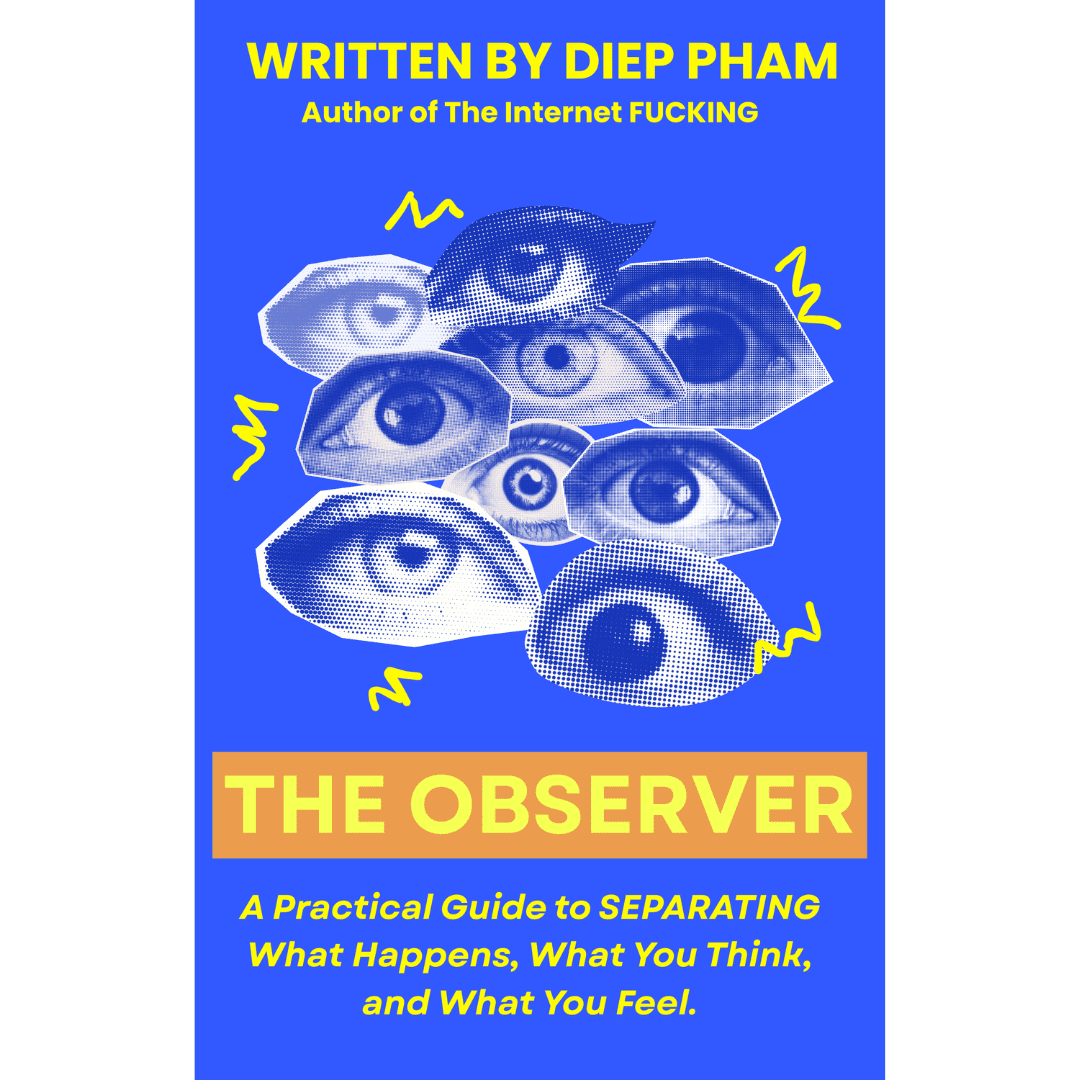
A Practical Guide to Separating What Happens, What You Think, and What You Feel
Genrne: Self-Help/ Emotional Intelligence/ Personal Mastery
Tone: Calm, grounded, emotionally mature, authoritative but compassionate
Targeted Audience:
- Emotionally sensitive but intelligent adults.
- Women & men who are tired of emotional chaos.
- Readers who want clarity, not romance or drama.
- Leaders, creatives, believers, thinkers, observers of life.
BOOK PHILOSOPHY (CORE IDEA)
You don’t suffer because of what happens.
You suffer because you merge events, interpretations, and emotions into one story — and lose your inner authority. Trust me, I learned my lesson hard ways and it costed too much, but now thanks for my awakening, you will no longer need to be suffered to learn.
Learn from me but first, pay the price of the book for $13.00 and the WISDOM is your forever, this price is cheaper than you think my beloved friend. Hit the Open CHAT button if you have any questions, cheers!
This Book Teaches Readers How to:
• Separate Reality from Story.
• Observe emotions without drowning in them.
• Regain power without suppressing feelings.
• Become internally calm even when life is uncertain.
The book is structured into 4 PARTS – 21 CHAPTERS
Each chapter follows a signature format:
1. The Pattern (What usually happens).
2. The Trap (Where people lose clarity).
3. The Observer Lens (How to see differently).
4. Practical Exercise (Simple, grounded, repeatable).
PART I – WHY YOU NEED TO BECOME THE OBSERVER
Chapter 1 – The Invisible Confusion
• Why most emotional pain is not real pain
• How people confuse facts with meanings
• The cost of emotional fusion
• Why “understanding your emotions” is not enough
Key message: Awareness without structure keeps people stuck.
Chapter 2 – The Three Layers of Human Experience
• Layer 1: What Happens (Facts)
• Layer 2: What You Think It Means (Interpretation)
• Layer 3: What You Feel (Emotion)
• Why these layers must never be mixed
This chapter introduces the core framework of the entire book.
Chapter 3 – Why Intelligent People Suffer More
• High sensitivity + high intelligence = deeper emotional loops
• Why overthinking is actually misdirected observation
• The danger of emotional imagination
Chapter 4 – Emotional Maturity Is Not Emotional Coldness
• The difference between observation and detachment
• Why numbing emotions destroys clarity
• What true emotional maturity actually looks like
PART II – WHAT HAPPENS: LEARNING TO SEE FACTS CLEARLY
Chapter 5 – Facts Are Rare. Stories Are Everywhere
• How the mind automatically adds narrative
• Why certainty feels safer than truth
• The illusion of “reading between the lines”
Chapter 6 – Neutral Reality and the Discipline of Seeing
• How to describe events without emotion
• The skill of neutral language
• Why neutrality feels uncomfortable at first
Chapter 7 – When No Action Is Also an Action
• The psychological meaning of silence
• Why people project intentions onto inaction
• Learning to stay with “not knowing”
Chapter 8 – The Observer’s Rule: Never Fill in the Gaps
• Why assumptions feel logical but aren’t
• The emotional cost of guessing
• Training the mind to stop finishing unfinished stories
PART III – WHAT YOU THINK: MASTERING INTERPRETATION
(The Most Dangerous Layer)
Chapter 9 – Interpretation Is Not Intuition
• How intuition gets hijacked by fear and desire
• The difference between insight and projection
• Why emotional certainty is often false certainty
Chapter 10 – The Ego’s Favorite Game: Meaning-Making
• Why the mind hates ambiguity
• How meaning-making creates attachment
• The comfort of imagined narratives
Chapter 11 – Emotional Hypotheses vs Emotional Truth
• Why hypotheses feel real
• How to hold interpretations lightly
• The discipline of provisional thinking
Chapter 12 – When Hope Becomes Emotional Debt
• The hidden cost of expectation
• How hope turns into silent pressure
• Releasing imagined futures
Chapter 13 – The Power of “I Don’t Know Yet”
• Why uncertainty is emotional strength
• Learning to pause interpretation
• Restoring inner authority through restraint
PART IV – WHAT YOU FEEL: EMOTIONS UNDER OBSERVATION
(Power Without Suppression)
Chapter 14 – Emotions Are Signals, Not Commands
• Why feelings feel urgent
• How emotions demand action
• Learning to listen without obeying
Chapter 15 – The Difference Between Feeling and Reacting
• Why reactions feel like relief
• The emotional hangover of reaction
• Creating space between feeling and movement
Chapter 16 – Emotional Waves and the Art of Non-Interference
• Why emotions peak and fall naturally
• How interference prolongs suffering
• Letting emotions pass without control
Chapter 17 – When Compassion Turns Into Emotional Labor
• Why emotionally mature people over-give
• The danger of carrying emotions for others
• Returning responsibility to where it belongs
Chapter 18 – Boundaries Without Explanation
• Why explaining is often emotional defense
• The power of quiet consistency
• Choosing self-respect over emotional negotiation
PART V – LIVING AS THE OBSERVER
Chapter 19 – Calm Is a Skill, Not a Personality
• Why calm people are trained, not lucky
• Building emotional stamina
• Calm under uncertainty
Chapter 20 – Love Without Losing Yourself
• Emotional presence without emotional fusion
• Why healthy connection requires observation
• Staying sovereign in intimacy
Chapter 21 – Becoming the Observer for Life
• Observation as a lifelong practice
• The freedom of internal clarity
• Choosing response over reaction — again and again
ENDING MESSAGE (CLOSING NOTE)
Becoming The Observer does not mean you feel less.
It means you suffer less — because you finally see clearly.


Reviews
There are no reviews yet.