Description
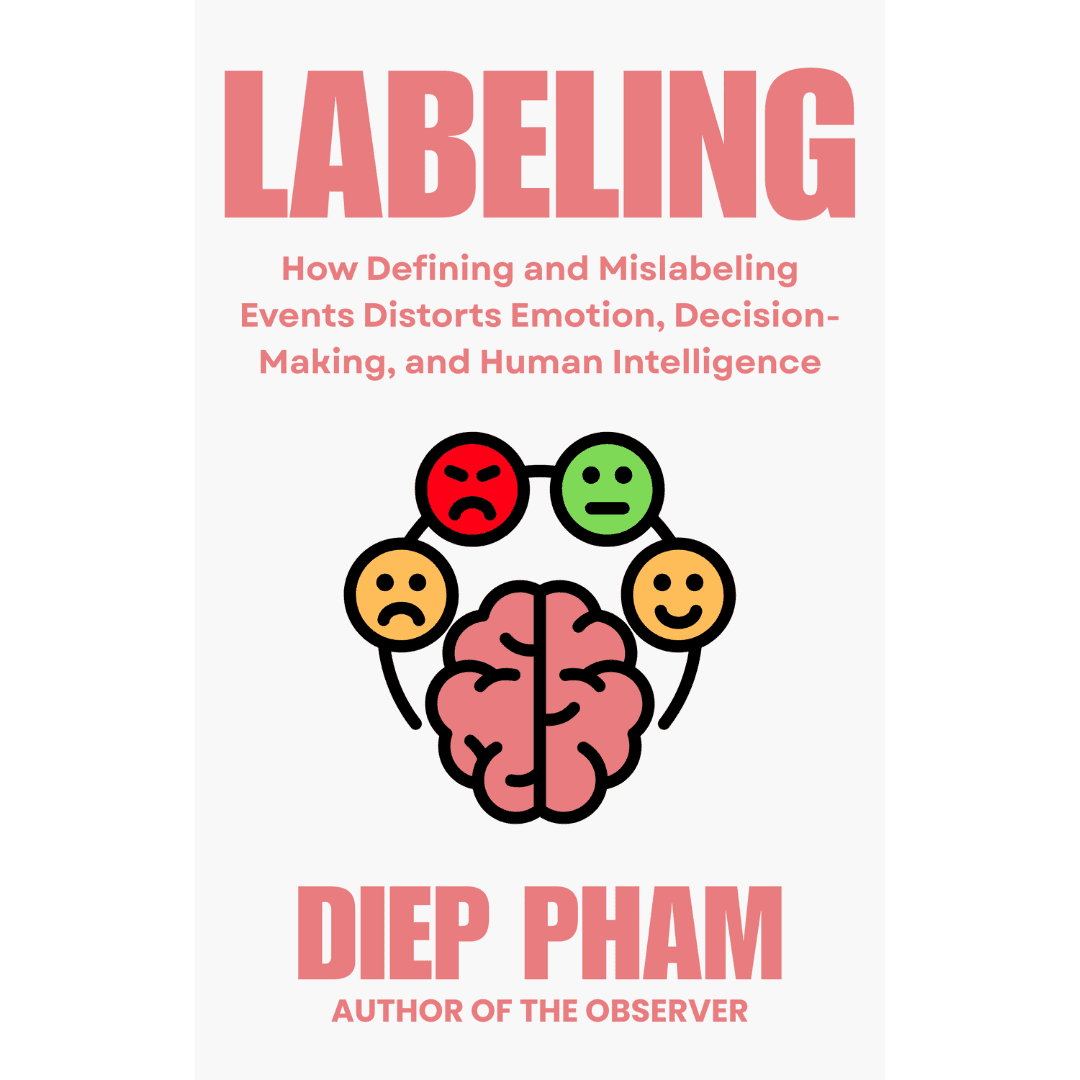
How Defining and Mislabeling Events Distorts Emotion, Decision-Making, and Human Intelligence
Introduction: The Power of Labels
• Introduce the concept of labeling: the human tendency to interpret events, actions, and behaviors through subjective filters and assign labels.
• Highlight why this matters: labeling can override objective reality, leading to distorted emotions, flawed decisions, and harmful behavioral patterns.
• Brief real-life examples: small interactions at work or in relationships being interpreted as “hostile,” “careless,” or “insincere,” triggering unnecessary emotional reactions.
Part 1: Understanding the Labeling Process
Chapter 1: From Event to Interpretation
• Break down the cognitive process:
1. Observation – a neutral event occurs.
2. Interpretation – we translate the event into meaning through personal biases.
3. Labeling – we assign a category or judgment (e.g., “lazy,” “dishonest,” “mean”).
• Explain how labels are often not about facts, but about subjective perception.
Chapter 2: The Emotional Cascade
• Explore how labeling triggers emotions:
• Label → Emotional Response → Impulsive Thought → Reaction.
• Show that even accurate labels can cause overreactions if applied prematurely or rigidly.
• Examples: labeling a colleague as “untrustworthy” after a single mistake; labeling oneself as “incompetent” after failing once.
Chapter 3: The Intelligence Filter
• Discuss how repeated labeling reduces critical thinking and distorts judgment.
• Explain cognitive biases: confirmation bias, negativity bias, and how labels amplify these tendencies.
• Show that labeling narrows perception and inhibits adaptive decision-making.
Part 2: When Labels Go Wrong
Chapter 4: Mislabeling and Its Consequences
• Case studies of common mislabeling: relationships, workplace conflicts, social interactions.
• Highlight how labeling incorrectly leads to inappropriate emotions and actions.
• Examples: misinterpreting neutral actions as aggressive, interpreting silence as rejection, etc.
Chapter 5: Self-Labeling and Identity Distortion
• Explore the dangers of labeling oneself: “I am unlovable,” “I am stupid,” “I am weak.”
• Show how self-labels affect behavior and decision-making, often creating a self-fulfilling prophecy.
Chapter 6: Labeling in Social and Cultural Contexts
• How societal and cultural labels shape perception: gender roles, social norms, stereotyping.
• The interaction between external labels and internal labeling: how outside judgments reinforce personal cognitive loops.
Part 3: Breaking the Cycle
Chapter 7: Awareness and Observation
• Techniques to notice when labeling is happening.
• Mindfulness and cognitive distancing: separating event → interpretation → label.
Chapter 8: Reframing and Neutral Observation
• Methods to interpret events without assigning judgmental labels prematurely.
• Practice neutral language: focus on observable facts rather than interpretations.
Chapter 9: Emotional Regulation
• How to respond appropriately without letting labels dictate feelings.
• Tools: journaling, thought tracking, pause-before-action methods.
Chapter 10: Building Label-Resilient Thinking
• Cognitive strategies to avoid falling into the trap of mislabeling.
• Training the mind to see events as data, not definitions.
• Exercises to test assumptions and check emotional reactions against facts.
Conclusion: Freedom from Labels
• Summarize the risks and consequences of unexamined labeling.
• Emphasize that true emotional intelligence requires seeing events as they are, not as they are labeled.
• Encourage building self-awareness, mindful interpretation, and reflective action to protect both emotional health and decision-making.
Appendix / Practical Tools
• Label Awareness Checklist: questions to ask before assigning a label.
• Neutral Language Practice: examples and templates for reframing events.
• Emotional Pause Scripts: steps to prevent automatic reactions to labels.
• Self-Reflection Journal Prompts: identifying patterns of mislabeling in daily life.
Only logged in customers who have purchased this product may leave a review.




Reviews
There are no reviews yet.