
A Comprehensive Guide to Understanding Your Mind, Breaking Patterns, and Accelerating Emotional Growth
Have you ever noticed how some people seem to learn from their mistakes almost immediately, while others repeat the same painful patterns for years or even decades? Have you watched someone exit a toxic relationship cleanly and move forward with clarity, while you or someone you know remains stuck analyzing, explaining, and hoping for change that never comes?
The difference is not intelligence. Some of the most brilliant people I know stay trapped in destructive relationship patterns, career situations that drain them, or emotional states that keep them small. Intelligence alone does not translate into emotional growth or life transformation.
The difference is not empathy or emotional sensitivity either. In fact, highly empathetic people often struggle more with emotional loops because they feel so deeply that they cannot step back from their feelings long enough to examine them objectively. Their capacity to feel becomes a trap when they lack the capacity to observe what they are feeling.
The difference is not even good intentions. You can desperately want to change, invest enormous energy in self-improvement, read every book and attend every workshop, and still find yourself making the same choices, attracted to the same type of people, triggered by the same situations, caught in the same emotional responses.
So what is the difference? What allows some people to grow rapidly, to break free from patterns that once controlled them, to transform their emotional lives fundamentally and permanently?
The answer lies in a cognitive skill that is rarely discussed but absolutely foundational to psychological growth. It is called metacognition, and it is the hidden mechanism behind rapid emotional maturity and conscious decision-making.
Before we dive deep into what metacognition is and how to develop it, let me introduce a concept that will help you understand why this skill matters so profoundly. I call them emotional loops, and if you are honest with yourself, you probably recognize at least one operating in your own life right now.
Emotional loops are repeating relational and psychological patterns that play out again and again with different people but remarkably similar dynamics. Perhaps you repeatedly choose partners who are emotionally unavailable, then exhaust yourself trying to earn their consistent presence. Perhaps you consistently prioritize others’ needs over your own, then feel resentful and depleted. Perhaps you avoid conflict until resentment builds to an explosion, damaging relationships you care about. Perhaps you pursue people who are ambiguous about you while losing interest in people who show clear, consistent care.
These loops are not random. They are not coincidences. They are the behavioral manifestation of unexamined internal patterns, usually rooted in attachment wounds, learned beliefs about relationships, or adaptive strategies you developed in childhood that no longer serve you.
And here is the crucial insight that this entire article rests upon: You cannot break an emotional loop from inside it. You can only break it by developing the capacity to observe it while you are in it. This capacity to observe your own mental and emotional processes while they are happening is metacognition.
Metacognition is the hidden skill that allows rapid emotional maturity and conscious decision-making. It is the difference between being controlled by your patterns and being able to choose different responses. It is the difference between repeating your history and creating a new future. It is the difference between emotional reactivity and emotional sovereignty.
This article will give you a comprehensive understanding of what metacognition is, why it is so rare, how it accelerates emotional growth, and most importantly, how to develop it through practical, trainable steps. By the end, you will have a framework for observing your own mind in ways that create genuine transformation rather than just intellectual understanding.
What Is Metacognition? A Clear and Human Definition
Let me start with the formal definition, then translate it into something you can actually use in your daily life.
The Formal Definition
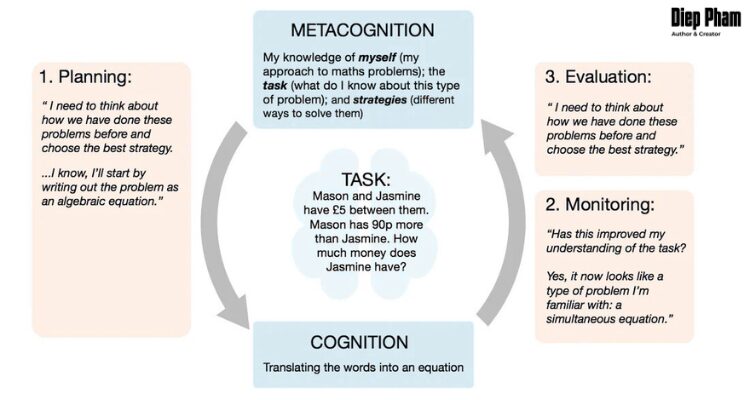
Metacognition literally means thinking about your own thinking. It is the capacity to observe, understand, and regulate your cognitive processes. In simpler terms, it is awareness of awareness. It is the part of your mind that can step back and watch the rest of your mind operate.
Metacognition involves awareness of your thoughts, not just having thoughts but noticing that you are having them, recognizing patterns in your thinking, and understanding how your thoughts influence your emotions and behaviors.
It includes awareness of your emotions, not just feeling them but observing them as phenomena that arise and pass, understanding what triggers them, and recognizing how they shape your perceptions and choices.
It encompasses awareness of your reactions, noticing your automatic responses before you act on them, understanding why you react the way you do, and creating space between stimulus and response.
And perhaps most importantly, it involves awareness of your internal patterns, recognizing the repetitive loops in your psychology, understanding how past experiences shape current responses, and seeing the themes that recur across different situations and relationships.
The essence of metacognition is the ability to observe your mind without being completely swallowed by it. It is the capacity to be inside your experience while simultaneously maintaining a perspective on that experience.
Think of it this way. Most of the time, you are like an actor so absorbed in your role that you forget you are acting. You are completely identified with the character, the emotions, the drama. Metacognition is like suddenly remembering you are an actor while still performing. You are still in the scene, still feeling the emotions, but you also have awareness that this is a performance, that you are more than this role, that you have choices about how to proceed.
Metacognition Versus Intelligence Versus Emotional Awareness
To truly understand metacognition, it helps to distinguish it from related but different capacities that are often confused with it.
Intelligence is fundamentally about problem-solving ability. It is your capacity to learn, reason, understand complex ideas, think abstractly, and adapt to new situations. You can have a very high IQ and still lack metacognitive capacity. In fact, highly intelligent people sometimes struggle more with metacognition because their intelligence allows them to construct elaborate justifications for their patterns, creating sophisticated stories that prevent them from seeing the simple truth of what is happening.
Emotional awareness is about recognizing and naming your emotions. It is the ability to say “I feel anxious” or “I am angry right now” or “This situation is making me sad.” This is an important skill, foundational to emotional intelligence. But it is not the same as metacognition.
Metacognition goes deeper. It is seeing the process behind emotions and thoughts. It is understanding why you feel anxious, what specific aspect of the situation triggered that anxiety, what historical pattern is being activated, and what that anxiety is trying to protect you from.
Let me give you a concrete example to illustrate the difference.
Someone with basic emotional awareness might say: “I feel anxious.”
Someone with more developed emotional awareness might say: “I feel anxious, and I notice it is showing up as tightness in my chest and racing thoughts.”
Someone with metacognitive awareness might say: “I notice anxiety is arising. I recognize this is triggered by uncertainty in this relationship. I see that uncertainty activates an old attachment pattern where I equate ambiguity with abandonment. I observe my mind generating strategies to seek reassurance. I understand this anxiety is not really about present reality but about an old wound being touched. I can feel the anxiety fully while also choosing not to act from it.”
Do you see the difference? The first two statements are about recognizing what you feel. The third statement is about understanding the entire cognitive and emotional process, seeing the pattern, recognizing its origins, and maintaining agency even while feeling the emotion fully.
This is metacognition. It is not about not feeling. It is about feeling with awareness, understanding, and choice.
Why Metacognition Is Rare and Why Most People Stay in Loops
If metacognition is so valuable, why is it not more common? Why do so many people, including intelligent, emotionally aware people, struggle to develop this capacity?
The answer lies in how most of us are taught to relate to our internal experience. From childhood, we are taught to be inside our emotions, not to observe them. When you felt sad as a child, adults told you what to feel instead or tried to fix your feeling or dismissed it, but rarely did anyone teach you to simply observe the sadness with curiosity and understanding.
Most people live inside their emotions, not above them. This is not a judgment, just an observation. Your emotional experience feels immediate, personal, urgent, and absolutely true. When anxiety arises, it does not feel like a temporary state that will pass. It feels like reality itself. When you are angry, the anger feels completely justified and the object of your anger feels genuinely blameworthy. When you are in love, that person seems objectively special rather than someone your particular psychology is drawn to for specific reasons.
Emotional reactions feel personal, urgent, and absolute. They demand immediate action. Your anxiety insists you must text right now to get reassurance. Your anger insists you must express it immediately or explode. Your attraction insists you must pursue this person regardless of red flags. Your fear insists you must avoid this situation at all costs.
Without the capacity to observe these urges without immediately acting on them, you become their servant. And this lack of internal distance leads to predictable patterns that keep people stuck in emotional loops.
It leads to over-attachment, becoming so enmeshed with another person that you lose your sense of self, making their emotional state your responsibility, needing their approval to feel okay about yourself.
It creates over-explaining, the compulsion to make people understand you, to justify your feelings, to convince others of your perspective because you need external validation that your internal experience is legitimate.
It results in over-investing, pouring enormous time, energy, and emotion into situations and people who are not reciprocating, unable to cut losses because you are too identified with the outcome.
And perhaps most painfully, it keeps people staying too long in unclear relationships, tolerating ambiguity, accepting breadcrumbs, hoping and waiting and adjusting because they cannot step back far enough to see the pattern clearly and make a different choice.
Without metacognition, pain feels confusing and endless. You do not understand why you keep ending up in the same situations. You feel victimized by your own patterns. You experience yourself as someone who has bad luck in relationships or who keeps attracting the wrong people or who just cannot seem to figure out this area of life, when in reality, the issue is lack of capacity to observe the internal processes that drive your external choices.
This is why metacognition is rare. It requires something our culture does not typically teach: the ability to maintain dual awareness, to be inside your experience while also watching it, to feel your emotions fully while also understanding them objectively.
But it can be learned. And once learned, it transforms everything.
How Metacognition Accelerates Emotional Maturity
Once you develop metacognitive capacity, your rate of emotional growth accelerates dramatically. What might have taken years of therapy or repeated painful lessons can now be integrated in weeks or months. Let me explain the specific mechanisms through which metacognition creates this acceleration.
The Ability to Name the Pattern While Still Inside It
The most powerful moment in any emotional growth process is the moment you can recognize a pattern while you are still in it, before you have fully acted it out, while you still have the opportunity to choose differently.
Most people can only see their patterns in retrospect. They look back after a relationship ends and say, “Oh, I see now that I kept making myself small to accommodate them” or “I realize I was attracted to their unavailability.” This retrospective insight is valuable, but it often does not prevent them from repeating the same pattern with the next person because the insight arrives too late, after the momentum of the pattern has already carried them through the entire cycle.
Metacognition allows real-time pattern recognition. You are on a date with someone who is charming but subtly dismissive, and in the moment, you notice: “This is familiar. This dynamic has shown up before. I recognize the pull to prove myself to someone who is withholding approval. This is not just about this person. This is a familiar emotional script that I have played out multiple times.”
The moment awareness appears, the loop weakens. Not instantly, not completely, but noticeably. Because once you see the pattern, you cannot unsee it. Once you recognize that you are repeating an old script rather than responding to unique present circumstances, the pattern loses its grip.
You might still feel the pull. The attraction might still be there. The old urge to pursue and prove yourself might still arise. But now there is space around it. Now there is a part of you that recognizes what is happening and can ask: “Do I want to do this again? Do I want to invest in this pattern one more time? Or do I want to choose differently?”
This is the beginning of genuine choice. Not forced choice through willpower or self-denial, but organic choice that emerges from clear seeing.
Pain Becomes Information, Not Identity
One of the most transformative shifts that metacognition enables is changing your relationship to emotional pain. Without metacognition, pain is simply suffering. It feels bad, you want it to stop, you either try to escape it or you collapse into it, and the experience leaves you feeling damaged or broken or wrong somehow.
With metacognition, pain becomes something entirely different. It becomes information, data about your internal landscape, feedback about what needs attention or healing, and insight into patterns that require examination.
Instead of being consumed by pain and asking “What is wrong with me? Why do I always end up here? Why can I never get relationships right?” you step back into metacognitive awareness and ask “What is this teaching me? What pattern is being revealed? What old wound is this touching? What does this pain tell me about what I need to heal or learn or understand?”
This is not spiritual bypassing or trying to find silver linings in genuinely harmful situations. This is practical psychology. Your emotional pain always contains information. It is signaling something. The question is whether you can read the signal or whether you simply experience it as noise.
When you are rejected and it devastates you far beyond what the situation warrants, that disproportionate pain is information. It is telling you that this rejection is touching something old, some core wound about worthiness or belonging that existed long before this current person. Metacognition allows you to see this and address the real issue rather than just feeling crushed and either pursuing the person to undo the rejection or avoiding all vulnerability to prevent future rejection.
When you feel anxious about someone’s inconsistent communication and that anxiety consumes your entire day, metacognition allows you to recognize: “This level of anxiety is not proportional to the situation. I am responding not just to this person’s behavior but to what uncertainty means in my attachment system. I am not just worried about this relationship. I am feeling an old terror of abandonment that is being activated.”
With this awareness, you can address the real issue. You can work on your attachment security. You can examine why you are choosing people whose behavior triggers this anxiety. You can develop the capacity to tolerate uncertainty without collapsing. The pain becomes a doorway to growth rather than just suffering to endure.
Fast Detachment Without Emotional Suppression
Perhaps the most misunderstood aspect of metacognition is how it relates to detachment. Many people confuse detachment with emotional suppression or numbness or not caring. They think developing the capacity to observe emotions means becoming cold or disconnected.
But metacognitive detachment is something entirely different. It does not mean not feeling. It means feeling fully while understanding clearly and choosing consciously.
Let me break this down because it is crucial. When I say metacognition allows detachment, I mean psychological detachment, not emotional detachment. Psychological detachment is the ability to not be identified with or controlled by your emotional states. You can feel anxiety without being anxious as an identity. You can feel sadness without believing you are fundamentally a sad person. You can feel attraction without being compelled to act on it.
This is why some people can exit emotional situations quickly and cleanly. Not because they do not feel the emotions, but because they can feel them fully without being controlled by them. They can recognize when a situation is not healthy even while still feeling love or attraction. They can acknowledge their sadness about leaving while still maintaining clarity that leaving is necessary. They can feel the grief of loss without questioning whether they made the right decision.
People without metacognition experience emotions as absolute truths that must be acted upon. If I feel love, I must stay. If I feel attraction, I must pursue. If I feel anxious, I must seek reassurance. The emotion dictates the action automatically.
People with metacognition experience emotions as important information that informs but does not dictate action. I feel love and I also see this relationship is harmful. I feel attraction and I also recognize these are red flags. I feel anxious and I also understand this anxiety is about my patterns, not necessarily about reality. I can feel everything fully and still choose based on wisdom rather than just feeling.
This is fast detachment. Fast not because you do not care, but because you can see clearly. And clear seeing naturally leads to appropriate action without the need for endless deliberation or repeated painful lessons.
How to Develop Metacognition: Practical, Trainable Steps
Metacognition might sound abstract or like something you either have or do not have, but it is actually a trainable skill. Like any skill, it requires practice, but the practices themselves are straightforward and accessible. Let me walk you through specific techniques that develop metacognitive capacity.
Create Distance Between Emotion and Action
The foundational practice of metacognition is learning to pause between feeling and acting. This sounds simple but runs counter to how most people operate. Most people experience a feeling and immediately act on it, sometimes so quickly that they barely register that a feeling occurred.
You feel anxious, you immediately text. You feel attracted, you immediately pursue. You feel rejected, you immediately withdraw or attack. The feeling and the action are collapsed into a single moment with no space between them.
Creating distance means noticing the feeling and consciously choosing not to act immediately. This does not mean suppressing the urge to act. It means holding the urge with awareness while you examine it.
The practical application is straightforward. When you notice a strong emotion arising and an urge to act on it, pause. Take three deep breaths. Literally count them. This creates just enough space for your prefrontal cortex to come online and for metacognitive awareness to become possible.
Then ask yourself: “What am I feeling? What am I wanting to do? What will happen if I do it? What will happen if I do not? Is this action coming from wisdom or from an emotional reflex?”
Replace the automatic “I feel therefore I must act” with the metacognitive “I feel and I observe.” This single shift, practiced consistently, transforms your relationship to your inner experience.
Practice Inner Narration
One of the most effective techniques for building metacognition is developing an inner narrator, a voice that describes what is happening internally as it happens. This might sound strange at first, even a bit dissociative, but it is actually how you build the observer capacity that is the foundation of metacognition.
The practice is simple. As you go through your day, particularly in emotionally charged situations, mentally describe what you are experiencing using third person or observational language.
Instead of being inside the experience thinking “I am so anxious, why is not he texting back, what did I do wrong,” you create slight distance by narrating: “I notice anxiety arising. I notice the urge to check my phone. I notice thoughts questioning my worth. I observe the impulse to reach out for reassurance.”
The key phrase is “I notice” or “I observe.” This language creates distance. It reminds you that you are not the anxiety, you are the awareness that observes anxiety. You are not the urge, you are the awareness that notices the urge.
Practice this consistently and you will notice something remarkable. Emotions begin to lose some of their power to overwhelm you. Not because you are suppressing them, but because you are no longer completely identified with them. There is you and there is the emotion, and you can observe the emotion without being consumed by it.
Language creates distance. The simple act of naming what is happening internally creates the space that allows choice. This is why talk therapy can be so effective. The process of putting experiences into words inherently creates metacognitive distance.
Identify Your Repeating Emotional Triggers
Metacognition requires knowing yourself well enough to recognize your specific patterns and triggers. This means doing the work of actually identifying what consistently activates your emotional reactivity.
For many people, common triggers include ambiguity in relationships, where not knowing where you stand creates disproportionate anxiety. Emotional unavailability in partners, where someone’s distance creates a compulsion to pursue. The choice between being chosen by someone versus choosing yourself, where external validation feels more important than self-respect.
But your triggers are specific to you, shaped by your history and wounds. The practice is to write them down not as stories but as patterns. Not “John did this thing and it made me feel that way,” but “I notice I am triggered by perceived rejection. I notice I become anxious when I cannot control outcomes. I notice I overfunction in relationships when I sense the other person withdrawing.”
Writing these patterns down serves multiple purposes. First, it moves them from vague internal experience to concrete observations. Second, it allows you to see patterns across different situations that you might not recognize otherwise. Third, it creates accountability because once you have named a pattern, you cannot easily pretend you do not know it is happening.
Review your pattern list regularly. When you find yourself in familiar emotional territory, reference your list. “Is this one of my known triggers operating right now?” Often, simply recognizing that you are experiencing a familiar trigger rather than a unique crisis changes everything.
Ask Meta-Questions
The practice of asking meta-questions is perhaps the most direct way to activate metacognitive awareness. Meta-questions are questions about your mental processes rather than questions about external circumstances.
Instead of asking “Why is this person treating me this way?” which focuses outward, you ask metacognitive questions that focus inward: “What part of me is activated right now? What in me is responding so strongly to this person’s behavior? What does my reaction tell me about my patterns?”
Instead of asking “What should I do about this situation?” you ask “Is this a current reality I am responding to or an old emotional memory being triggered? Am I seeing this person clearly or am I seeing them through the filter of past experiences?”
And perhaps most powerfully, you ask “What happens if I do not act on this feeling? What if I simply feel it fully without trying to change it or act on it or make it go away?”
These questions are not rhetorical. Actually pause and consider them. The process of considering these questions is itself the practice of metacognition. You are training your mind to observe itself, to question its automatic processes, to create space for conscious choice.
Over time, these meta-questions become more automatic. You will find them arising naturally in charged situations: “Wait, what part of me is activated right now?” This automatic arising of metacognitive questions is a sign that the skill is becoming integrated.
Metacognition and the Inner Life: Why Observation Matters More Than Control
One of the most important understandings about metacognition is that it is not about controlling your emotions or thoughts. Many people approach self-development from a control perspective. They try to think the right thoughts, feel the right feelings, force themselves to change through sheer willpower.
This approach rarely works long-term and often creates additional problems through suppression and denial.
Why Inner Growth Requires Observation, Not Control
The truth is you cannot force emotions to disappear. Emotions are not problems to be solved or enemies to be defeated. They are information systems, communication from your unconscious, signals about your needs and wounds and boundaries.
When you try to control emotions, you inevitably suppress them. And suppressed emotions do not disappear. They go underground where they operate outside your awareness, influencing your behavior in ways you cannot see or consciously choose.
Metacognition is not about control. It is about observation and understanding. You cannot control whether anxiety arises, but you can observe it when it does, understand what triggered it, recognize the stories your mind is creating around it, and choose how to respond rather than automatically reacting.
You can only understand and integrate emotions, not eliminate them. Integration means making space for the full range of your emotional experience while not being controlled by any single emotion. It means feeling what you feel while maintaining perspective, allowing emotions to arise and pass without needing to either act on them or suppress them.
Metacognition allows your inner life to become coherent. Instead of being a chaotic jumble of conflicting impulses and overwhelming feelings, your inner experience becomes something you can understand. You can see the patterns. You can recognize the triggers. You can understand why you feel what you feel. And this understanding creates a sense of internal coherence that is itself deeply calming.
Emotional Safety Comes From Self-Awareness
One of the most surprising discoveries people make when they develop metacognition is that simply understanding what is happening internally creates a profound sense of emotional safety, even when circumstances have not changed.
Clarity replaces anxiety. When you do not understand why you feel what you feel, the feelings themselves become frightening. “Why am I so anxious? Why can I not just be normal? What is wrong with me?” But when you understand “I am anxious because uncertainty triggers my attachment wounds,” the anxiety itself becomes less frightening. It makes sense. It has a cause. It is not random chaos.
Understanding replaces self-blame. When you can observe your patterns with metacognitive awareness, you stop seeing yourself as broken or defective. You see yourself as someone with specific wounds that create specific patterns, and patterns can be understood and changed. You move from “I am fundamentally flawed” to “I have patterns that developed for understandable reasons and can evolve with awareness and practice.”
The nervous system calms when the mind understands what is happening. Your nervous system is constantly scanning for threats. When your internal experience feels chaotic and incomprehensible, your nervous system remains activated, perceiving threat even when no external danger exists. But when you can observe and understand your internal processes, your nervous system receives the message: “This is known. This is understood. We are not in danger.”
This is why metacognition is not just a cognitive skill. It has profound effects on your physiology, your emotional regulation, and your sense of basic safety in the world.
Metacognition in Relationships: The Foundation of Conscious Love
Nowhere is metacognition more important than in relationships, because relationships are where our patterns are most powerfully activated and where lack of awareness creates the most suffering.
Healthy love requires clarity, not guessing. It requires knowing what you feel, understanding why you feel it, recognizing your patterns, and making conscious choices based on that understanding rather than being driven by unconscious compulsions.
People with high metacognitive capacity show up in relationships very differently than those without it. Let me describe what this looks like in practice.
They leave earlier. Not because they are cold or give up easily, but because they can recognize incompatibility or unhealthy patterns clearly before investing years in trying to make something work that fundamentally does not. They do not need to hit rock bottom to recognize a relationship is not serving them.
They explain less. They do not feel compelled to make people understand them or justify their choices or convince others that their perspective is valid. They know their own experience, they trust their perceptions, and they do not need external validation to move forward.
They respect themselves more. Because they can observe their own patterns and understand their triggers, they can maintain boundaries even when emotions are intense. They can feel love or attraction while still protecting themselves from harm. They can acknowledge connection while still walking away from what does not work.
Perhaps most importantly, they do not confuse intensity with intimacy. They can recognize when emotional intensity is coming from healthy passion versus when it is coming from attachment wounds being activated, unhealed trauma creating magnetic attraction, or push-pull dynamics creating false intensity.
This discernment is crucial because our culture often glorifies intensity as evidence of real love. But intensity can arise from many sources, and not all of them are healthy. Metacognition allows you to see the difference.
When you meet someone and feel immediate intense connection, metacognition allows you to pause and ask: “What is creating this intensity? Is this person uniquely compatible with me, or are they familiar in ways that are activating old patterns? Is this the excitement of genuine compatibility or the excitement of an old wound recognizing someone who will trigger it?”
These questions are not about being cynical or closed off. They are about being conscious. Because when you can see clearly what is driving your attraction and your emotional responses, you can choose relationships based on genuine compatibility and mutual respect rather than being driven by unconscious patterns.
From Self-Reflection to Self-Leadership: The Ultimate Power of Metacognition
As you develop metacognitive capacity, something profound shifts in your relationship to yourself. You move from being subject to your emotions to being their observer. You move from being controlled by your patterns to being able to choose new responses. You move from self-reflection, which is looking back at what happened, to self-leadership, which is making conscious choices in real time.
Metacognition is the foundation of emotional boundaries. You cannot maintain healthy boundaries if you cannot observe when they are being violated, understand your resistance to enforcing them, and choose to prioritize your wellbeing even when it is uncomfortable.
It is the foundation of self-respect. When you can observe your patterns without judgment, when you can understand your triggers with compassion, when you can see your growth areas clearly, you develop genuine respect for yourself. Not inflated self-esteem that depends on thinking you are better than others, but solid self-respect that comes from really knowing yourself.
It is the foundation of conscious choice. Most people experience their lives as happening to them. Things occur, they react, they end up in situations they did not consciously choose. Metacognition changes this. You begin to see how your unconscious patterns create your circumstances. And once you see this, you can intervene, make different choices, create different outcomes.
You stop being pulled by emotions and start leading yourself. This does not mean you stop feeling or that you become coldly rational. It means you feel everything fully while also maintaining the capacity to choose your actions consciously rather than being automatically driven by whatever feeling is strongest in the moment.
This is self-leadership. It is the capacity to guide yourself through life based on your values and wisdom rather than being tossed around by emotional reactions to circumstances. It is the ability to be responsive to life rather than merely reactive.
And this capacity is life-changing. It affects every domain: your relationships become healthier because you can see patterns and make conscious choices. Your career develops because you can observe your fear and take risks anyway. Your sense of self strengthens because you know yourself deeply and can trust yourself to handle whatever arises.
The Practice of Metacognition in Daily Life
Developing metacognition is not something you do once and complete. It is a practice you return to again and again, becoming more skilled over time. Let me offer some practical ways to integrate this practice into daily life.
Start each morning with a brief check-in. Before engaging with external stimuli, spend two minutes observing your mental and emotional state. What thoughts are present? What is the quality of your emotional experience? What patterns are you noticing? This morning metacognitive check-in sets the tone for the day.
Throughout the day, use transitions as prompts for metacognitive awareness. Before a meeting, notice what you are feeling and what patterns might be activated. After a challenging interaction, observe your reaction without immediately acting on it. These transition moments are opportunities to practice the observer stance.
When you notice strong emotions arising, use the RAIN practice from mindfulness traditions, adapted for metacognition:
Recognize what is happening. Name the emotion, notice the thoughts, observe the physical sensations.
Allow the experience to be there. Do not immediately try to change it or make it go away. Just let it be present.
Investigate with curiosity. What triggered this? What pattern is this part of? What is this emotion trying to tell me? What would happen if I did not act on it?
Note what you are learning. What is this teaching you about yourself? What pattern is being revealed? What growth edge is this highlighting?
End each day with reflection. Write briefly about moments when you noticed patterns, when you chose differently than your automatic response, when you observed yourself with awareness. This consolidates the learning and strengthens the metacognitive capacity.
The more consistently you practice, the more automatic this awareness becomes. What initially requires deliberate effort eventually becomes a natural part of how you experience life. You begin to naturally observe your thoughts and emotions rather than being completely identified with them.
Common Obstacles and How to Navigate Them
As you develop metacognition, you will encounter some common challenges. Being aware of these ahead of time can help you navigate them more effectively.
The first obstacle is the fear that observation will kill spontaneity or make you too analytical. Some people worry that constantly observing themselves will make them robotic or unable to be present. But this fear is based on a misunderstanding. Metacognition is not constant analysis. It is the capacity to observe when needed. You can be fully immersed in joy or connection or flow states and then shift to observation when that serves you.
The second obstacle is the discomfort of seeing your patterns clearly. Once you develop metacognitive awareness, you cannot unsee your patterns. You will notice yourself falling into familiar loops even as you are doing it. This can initially feel frustrating or even shameful. But this discomfort is part of growth. You are becoming conscious of what was unconscious, and that consciousness is the precondition for change.
The third obstacle is the tendency to use metacognition as a form of self-judgment. Some people turn the observer stance into an internal critic, constantly monitoring themselves for mistakes or imperfections. True metacognition is observational and curious, not judgmental. When you notice yourself being harsh, that too becomes something to observe with curiosity: “I notice self-judgment arising. What is that about?”
The fourth obstacle is expecting metacognition to eliminate all difficult emotions. It will not. You will still feel anxiety, sadness, anger, fear. The difference is you will understand them better and have more choice about how to respond. The goal is not emotional perfection but emotional consciousness.
Conclusion: Metacognition as a Lifelong Inner Skill
As we come to the end of this exploration, I want to leave you with a few essential truths about metacognition and emotional growth.
First, emotional growth is not about avoiding pain. Pain is inevitable. It is part of being human, part of caring deeply, part of taking risks and living fully. The question is not whether you will experience pain but what you will do with it when it arrives.
Metacognition allows you to learn from pain faster. Instead of pain being something you simply endure or try to escape, it becomes information that accelerates your growth. Each painful experience, when met with metacognitive awareness, contains lessons that prevent you from needing to repeat the same lesson again and again.
Second, metacognition is not cold detachment. I want to emphasize this again because it is such a common misunderstanding. Developing the capacity to observe your mind does not make you less human or less feeling. If anything, it allows you to feel more fully because you are not afraid of your emotions. You know you can feel anything without being destroyed by it or controlled by it.
Metacognition is deep presence with wisdom. It is being fully present to your experience while also understanding it. It is feeling everything while also seeing clearly. It is being in the river of your life while also being able to see the river from the bank.
Third, metacognition is a practice, not a destination. You will not perfect this skill. You will not reach a point where you always observe clearly and never fall into old patterns. What happens instead is that you become more skilled over time. You notice patterns faster. You recover from reactive episodes more quickly. You spend less time stuck in confusion and more time operating from clarity.
And finally, developing metacognition is one of the most valuable investments you can make in yourself. Unlike external achievements or acquisitions, this is a skill that serves you in every area of life, that compounds over time, that cannot be taken from you. Once you develop the capacity to observe your mind, you carry that capacity with you always.
Every relationship becomes clearer. Every decision becomes more conscious. Every challenge becomes an opportunity for growth rather than just something to survive. Your entire experience of being human shifts when you can observe yourself with awareness and compassion.
The Transformative Power of the Observer Stance
Let me share what happens over time as you develop metacognitive capacity, because understanding the trajectory can help you stay committed to the practice even when it feels challenging.
In the beginning, metacognition is effortful. You have to remember to pause, deliberately create distance from your emotions, consciously ask yourself the meta-questions. It feels artificial, like you are adding an extra step to an already complex internal process. You might notice your patterns only after you have already acted on them. You observe in retrospect, which is valuable but not yet transformative.
With consistent practice, something begins to shift. You start noticing patterns while you are in them, though perhaps not early enough to change course. You are mid-reaction when awareness arrives: “Oh, I am doing that thing again.” This is progress. Real-time awareness, even if it arrives partway through the pattern, is the beginning of genuine choice.
Gradually, the awareness arrives earlier and earlier in the pattern. You feel the trigger and almost immediately recognize what is happening: “This is that familiar feeling. This is where I usually pursue/withdraw/explain/collapse. Do I want to do that again?” Now you have actual choice in the moment. You can still choose the old pattern if you want to, but now it is a choice rather than an automatic response.
Eventually, for many patterns, the metacognitive awareness becomes automatic. You do not have to remember to observe yourself. The observer stance is simply active as part of your baseline consciousness. You move through life with a dual awareness: experiencing while also observing the experience. The patterns that once controlled you now barely register as temptations. You see them, understand them, and naturally choose differently.
But here is what is beautiful and humbling about this process. New patterns will emerge. Deeper wounds will surface. You will encounter situations that activate parts of you that you did not know needed healing. And you will temporarily lose your metacognitive awareness in the face of these new challenges.
This is not failure. This is the nature of growth. Each new level of awareness reveals the next layer of unconscious patterns. The spiral continues, but you are moving upward. Each time around the spiral, you have more tools, more understanding, more capacity.
Metacognition and Emotional Maturity: Understanding the Connection
Emotional maturity is not about age. We all know people who are chronologically adult but emotionally reactive, unable to manage their impulses, trapped in the same patterns they have been repeating for decades. And we occasionally meet younger people who possess unusual wisdom and self-awareness.
The difference is metacognitive capacity. Emotional maturity is fundamentally the ability to observe your emotions without being controlled by them, understand your patterns without being enslaved to them, and make conscious choices that align with your values rather than just reacting to whatever you feel most strongly in the moment.
Every marker of emotional maturity is rooted in metacognition. The ability to self-soothe rather than seeking constant external regulation requires observing your emotional state and understanding what you need. The capacity to maintain boundaries requires recognizing when patterns of people-pleasing or merging are activated and choosing differently. The skill of repairing relationships after conflict requires observing your part in the dynamic rather than just defending yourself.
Emotional maturity means taking responsibility for your inner life. Not responsibility in the sense of blame, but responsibility in the sense of response-ability, the ability to respond consciously rather than just react automatically. This is only possible with metacognitive awareness.
And here is something crucial to understand about emotional maturity and metacognition: They develop together. You cannot force emotional maturity through willpower or rules or trying harder. Emotional maturity emerges naturally as metacognitive capacity develops. The more clearly you can observe yourself, the more naturally mature responses arise.
This is why lectures about how you should behave rarely create lasting change. People know intellectually what mature behavior looks like. The issue is not knowledge. The issue is that unconscious patterns are driving behavior, and those patterns cannot be changed through intellectual understanding alone. They change through awareness, through seeing them clearly while they are operating, through creating space between trigger and response.
Metacognition provides that space. And in that space, maturity grows.
The Neurological Foundation: What Happens in Your Brain
Understanding the neurological basis of metacognition can deepen your appreciation for this skill and help you practice more effectively. Your brain has distinct systems for experiencing emotions and for observing them, and metacognition involves activating the observational systems even while the experiential systems are engaged.
The limbic system, particularly the amygdala, is involved in generating emotional responses. This is the part of your brain that reacts to perceived threats, creates feelings of attraction or aversion, and generates the intense emotions that can overwhelm conscious awareness. The limbic system operates quickly and largely outside conscious control. It is designed to keep you safe by reacting faster than conscious thought.
The prefrontal cortex, particularly regions involved in executive function and self-reflection, is where metacognitive awareness arises. This part of your brain can observe what the limbic system is doing, can understand the causes of emotional reactions, and can make decisions that override emotional impulses when appropriate.
When you are completely identified with an emotion, when you are inside the experience with no distance, your limbic system is dominant and your prefrontal cortex is relatively quiet. Neurologically, this is what it means to be swept away by emotion.
When you practice metacognition, you are intentionally activating your prefrontal cortex even while your limbic system is generating emotional responses. You are creating what neuroscientists call top-down regulation, where the thinking brain modulates the emotional brain.
But here is what is fascinating. The goal is not prefrontal dominance. The goal is integration. You want your limbic system to function properly, providing emotional information and motivational energy. And you want your prefrontal cortex to function properly, providing perspective and conscious choice. Metacognition is the integration of these systems, feeling fully while also observing clearly.
Research on meditation and mindfulness, which are practices that develop metacognitive awareness, shows that consistent practice actually changes brain structure. The prefrontal cortex thickens. The amygdala shows reduced reactivity. The connections between these regions strengthen, making it easier to maintain awareness even during emotional intensity.
This means metacognition is not just a mental trick. It is developing actual neurological capacity. You are building brain architecture that supports conscious awareness and emotional regulation. And like any form of brain training, consistency matters more than intensity. Regular brief practice is more effective than occasional long sessions.
Metacognition and Relationships: Advanced Applications
Let me go deeper into how metacognition transforms relationships, because this is where the skill becomes most practically valuable.
In the attraction phase, metacognition allows you to observe what is drawing you to someone. Is it genuine compatibility or familiar patterns? Are you attracted to their actual qualities or to how they make you feel about yourself? Do they activate your growth edge in healthy ways or trigger old wounds in ways that feel exciting but are ultimately harmful?
Without metacognition, attraction feels like truth. “I am drawn to this person, therefore they must be right for me.” With metacognition, attraction becomes information to be examined. “I am drawn to this person. What does this attraction tell me? Is this person actually available and interested? Are they treating me with respect? Does this relationship allow me to be myself or require me to adapt excessively?”
During conflict, metacognition is invaluable. Instead of being completely inside your emotional response, defending yourself, attacking back, or shutting down, you can maintain dual awareness. Part of you feels the hurt or anger. Part of you observes: “I notice I am activated. I recognize this defensive pattern. What is actually happening here? What is my partner actually saying versus what my wounds are hearing?”
This does not mean you invalidate your feelings or fail to stand up for yourself. It means you can separate past from present, projection from reality, and respond to what is actually occurring rather than to the story your wounded parts are creating.
In ongoing relationship dynamics, metacognition allows you to recognize patterns before they become entrenched. You notice when you are falling into pursuer-distancer dynamics. You observe when you are people-pleasing instead of being authentic. You see when you are merging instead of maintaining healthy interdependence.
And most importantly, metacognition allows you to recognize when a relationship is fundamentally incompatible with your wellbeing, even when you still have feelings. You can love someone and recognize they are not healthy for you. You can feel attracted and still see that the dynamic is recreating old wounds rather than healing them. You can acknowledge the good while still choosing to leave because of the bad.
This capacity to hold complexity, to feel one thing while knowing another, to act from wisdom rather than from feeling alone, is the gift of metacognition in relationships.
The Dark Night of Metacognition: When Awareness Feels Like a Burden
I would be remiss if I did not address a phenomenon that many people encounter as they develop metacognitive capacity. There can be a phase where awareness itself feels overwhelming or even depressing.
You start seeing your patterns everywhere. You recognize how much of your behavior is driven by unconscious wounds. You observe yourself falling into familiar traps even as you are doing it. You see clearly the same dynamics playing out across different relationships. You become aware of how much suffering you have created for yourself through unconscious patterns.
This can feel heavy. There is a period where you see your patterns but have not yet fully developed the capacity to change them. You are aware but not yet free. You understand but are still trapped. This is what some spiritual traditions call “the dark night,” a period of disillusionment where old ways of being no longer work but new ways are not yet solid.
If you encounter this phase, know that it is temporary and it is actually a sign of progress. You are in the transition between unconsciousness and genuine transformation. You have gained awareness but are still building the capacity to consistently act from that awareness.
During this phase, several things are important. First, practice self-compassion. Seeing your patterns clearly does not mean you are broken or bad. It means you are becoming conscious. Everyone has patterns. Yours are just visible to you now.
Second, remember that awareness itself is the first step toward change. You cannot change what you cannot see. The fact that you now see your patterns clearly means change is possible. You are not stuck, even if it feels that way temporarily.
Third, be patient with the process. Neurological and psychological change takes time. You are rewiring patterns that have been operating for decades. Give yourself the same patience you would give someone learning any complex skill.
And fourth, get support if needed. A therapist who understands metacognitive awareness can be invaluable during this phase. They can help you navigate the territory between seeing clearly and acting differently.
The dark night passes. On the other side is genuine freedom, the kind that comes from really knowing yourself and being able to choose consciously how you show up in the world.
Metacognition and Self-Compassion: Essential Partners
As I have worked with people developing metacognitive capacity, I have observed that metacognition alone can sometimes become harsh. The observer stance can be co-opted by the inner critic, turning self-observation into self-judgment. “Look at you falling into that pattern again. You know better. What is wrong with you?”
This is why metacognition must be paired with self-compassion. The observer should be curious and kind, not judgmental and harsh. When you notice yourself in a familiar pattern, the metacognitive response is not “I am failing again” but “Interesting, this pattern is arising. What triggered it? What does this tell me? What do I need right now?”
Self-compassion recognizes that patterns developed for good reasons, usually as protective strategies in childhood or in response to painful experiences. They made sense at the time. They served a purpose. They were the best you could do with the resources and awareness you had.
Now, with greater resources and awareness, you can choose differently. But this does not make the old patterns shameful or wrong. They were adaptive at one time. They are just no longer serving you now.
When you observe your patterns through the lens of self-compassion, the observation itself becomes healing. Instead of awareness creating shame, it creates understanding. Instead of seeing yourself as broken, you see yourself as human, carrying wounds that are in the process of healing, developing capacities that take time to build.
The most powerful stance is the loving observer, the part of you that can see clearly without judgment, that understands deeply without harsh criticism, that witnesses your humanness with compassion while still supporting your growth.
This is the integration of metacognition and self-compassion. Clear seeing with kind witnessing. Honest assessment with gentle support. Truth with love.
Integration Practices: Making Metacognition a Way of Being
As you develop metacognitive capacity, the goal is not to spend your entire life observing yourself, creating a kind of paralysis through analysis. The goal is integration, where metacognitive awareness becomes a natural background capacity that is always available but does not interfere with spontaneity and presence.
Here are some practices that support this integration:
Mindfulness meditation is perhaps the most direct practice for building metacognitive capacity. Sitting meditation where you observe thoughts and emotions arising and passing, without engaging with them or pushing them away, trains the exact skill of metacognition. Even ten minutes daily makes a significant difference over time.
Journaling with specific prompts helps consolidate metacognitive insights. Questions like “What pattern did I notice today?” “When did I act from unconscious habit versus conscious choice?” “What triggered me and what did that reveal?” These prompts direct your attention toward metacognitive observation.
Working with a skilled therapist or coach who understands metacognition can accelerate development. They can point out patterns you are not yet seeing, ask questions that activate metacognitive awareness, and provide a reflective space where you can observe yourself with support.
Studying psychology and behavioral patterns provides frameworks for understanding what you observe. When you learn about attachment theory, cognitive distortions, or defense mechanisms, you gain language and concepts that help you make sense of your internal experience. Metacognition is more powerful when you have frameworks for understanding what you are observing.
Creating deliberate pauses throughout your day trains the capacity to step back from automatic reactivity. Before responding to a difficult email, pause. Before making an important decision, pause. In the pause, activate metacognitive awareness: “What am I feeling? What do I want? What am I assuming? What would serve me most here?”
Reviewing your day before sleep creates a daily metacognitive practice. Mentally review the day, noticing moments of unconscious reactivity and moments of conscious choice. This review consolidates learning and strengthens your capacity to observe in real time.
Over time, these practices weave together to create a baseline of metacognitive awareness that operates automatically, requiring no effort, simply available whenever you need it.
The Ultimate Gift: Freedom Through Awareness
As we come to the close of this deep exploration, I want to name what I believe is the ultimate gift of metacognition. It is freedom. Not freedom from emotions or challenges or difficult experiences. Freedom within them. Freedom to be fully human while also being conscious. Freedom to feel everything while also choosing wisely.
Without metacognition, you are subject to your patterns. They run you. They determine your choices. They create your experience. You live inside a script written by your wounds and conditioning, believing it is your authentic self.
With metacognition, you become the author of your own experience. You still have patterns, but now you can see them, understand them, and consciously choose whether to follow them or to respond differently. You still have emotions, but they inform rather than control you. You still have triggers, but they become invitations to deeper understanding rather than hijackings of your behavior.
This is what it means to grow from the inside out. Not changing yourself through force or willpower or trying to become someone you are not. But becoming more fully yourself through understanding, through awareness, through integration of all parts of yourself.
The emotional loops that once trapped you begin to loosen. Not because you have eliminated your wounds or transcended your humanity, but because you can see the loops clearly now. And seeing them clearly naturally changes your relationship to them.
You stop taking your thoughts so seriously. You recognize them as mental events rather than absolute truths. You stop being so controlled by your emotions. You feel them fully while also maintaining perspective. You stop repeating the same painful patterns. You see them arising and choose differently.
This is the transformation that metacognition makes possible. Not perfection, not the elimination of all difficulty, but conscious participation in your own life. The capacity to be awake within your experience rather than sleepwalking through it.
A Final Reflection: The Moment You Can Observe Your Mind
Let me leave you with the insight that opened this exploration, now hopefully enriched with deeper understanding:
The moment you can observe your mind, you are no longer trapped inside it.
This simple truth contains everything. When you are completely identified with your thoughts and emotions, believing they are you, you have no freedom. You are a puppet of your patterns, dancing to strings you cannot see.
But the moment you can step back, even slightly, and observe “I am thinking this thought” or “I am feeling this emotion” or “I am experiencing this pattern,” something profound shifts. You realize you are not the thought. You are the awareness that observes the thought. You are not the emotion. You are the space in which the emotion arises.
This does not mean the thoughts and emotions are not real or important. They are. But you are not limited to them. You are larger than them. You contain them rather than being contained by them.
This realization is the foundation of psychological freedom. It is what makes genuine choice possible. It is what allows you to grow and transform rather than just repeating the same patterns throughout your life.
Developing metacognition is not easy. It requires consistent practice, honest self-examination, patience with the process, and compassion for yourself as you learn. But it is possible. And it is perhaps the most valuable skill you can develop, because it is the skill that makes all other growth possible.
You cannot heal wounds you cannot see. You cannot change patterns you are not aware of. You cannot make conscious choices when you are unconsciously driven. Metacognition is the light that illuminates your inner landscape, making transformation possible.
So begin where you are. Notice one thought today. Observe one emotion. Create one pause between feeling and acting. Ask yourself one meta-question. Each small act of metacognitive awareness is a step toward greater freedom.
Your patterns do not have to control you forever. Your wounds do not have to determine your future. Your past does not have to become your present endlessly repeated.
Through metacognition, through the simple but profound act of observing your own mind, you can break the loops, transform the patterns, and grow from the inside out.
The journey begins with a single moment of awareness. And that moment is available to you right now.
The mind that can observe itself is the mind that can free itself. Metacognition is not the end of your emotional journey, but the beginning of conscious participation in your own evolution. May you develop the capacity to see yourself clearly, understand yourself deeply, and choose yourself wisely.
Thanks alot for reading, don’t forget to check out my collection of beautifully hand-crafted motivational quotes on Instagram to brighten your day HERE!
- Related Content: 15 Best Time-Management Books for Beating Procrastination
