
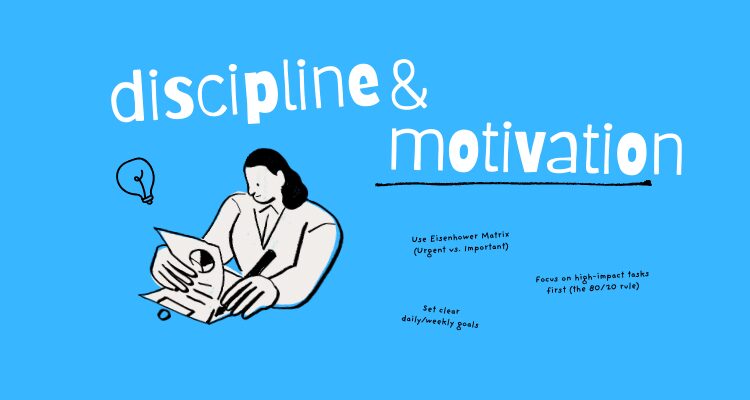
Based on Jim Rohn’s Philosophy on Personal Mastery Re-wrtitten by Diep Pham
When I first encountered Jim Rohn’s teachings on discipline versus motivation, something inside me shifted. For years, I—like many aspiring entrepreneurs and self-help enthusiasts—had been chasing the dragon of motivation.
I’d watch powerful YouTube videos, read inspiring quotes before bed, and feel absolutely unstoppable for approximately forty-eight minutes. Then reality would hit: the inspiration would evaporate faster than morning dew under the sun, and I’d be back to my old patterns.
This realization became the genesis of my exploration into one of personal development’s most misunderstood dichotomies: the fundamental difference between motivation and discipline.
And through studying Jim Rohn’s lifetime of wisdom, I discovered something that changed everything I thought I knew about achieving success.
The Illusion of Motivation: Why Your Feelings Are Lying to You
Let’s be brutally honest: motivation is a liar. Not intentionally, perhaps, but a liar nonetheless.
Motivation is emotional. It’s dependent on how much sleep you got last night, whether your coffee was strong enough, if your crush liked your Instagram post, or if you managed to avoid a traffic jam on your commute. It’s the unstable foundation upon which most people try to build their empires, and it’s precisely why most people fail.
Think about it. If you only work toward your goals when you’re motivated—when you feel that electric sensation of possibility coursing through your veins—you’re effectively working only about twenty percent of the time. That’s a C-minus performance, folks. And yet, most of us operate this way, wondering why we never seem to make significant progress despite our grand ambitions.
Motivation is seductive because it feels good. It’s like eating sugar. There’s an immediate rush, a dopamine spike that makes you feel like you’re genuinely changing your life. You consume a motivational video, read a powerful quote, attend an inspiring seminar, and for a brief, shimmering moment, you believe you can move mountains. But then Tuesday arrives, you have a difficult client call, the weather is gray, your body feels tired, and suddenly that mountain looks impossibly far away.
The problem with motivation is its shelf life. It’s essentially a sugar high for your ambition. You get the hit, you feel great, and then your brain chemistry resets. The real, unglamorous work of building something meaningful begins, and motivation has already packed its bags and moved on to find someone else to temporarily inspire.
Here’s what Jim Rohn taught me: motivation is unreliable because it’s predicated on circumstances you can’t control. You can’t control the weather. You can’t control your boss’s mood. You can’t control the economy or a pandemic or unexpected setbacks. And if your entire system for achievement depends on feeling motivated, you’re essentially holding your success hostage to variables completely outside your sphere of influence.
The Unshakeable Foundation: Why Discipline Always Wins
This is where discipline enters the conversation like a calm, steady force that doesn’t care about your feelings or the weather forecast.
Discipline is doing what needs to be done, precisely when it needs to be done, especially when you absolutely don’t want to do it. It’s the opposite of motivation—it’s not emotional, it’s not momentary, and it’s not dependent on external circumstances. Discipline is a practice, a habit, a commitment that exists independent of your emotional state.
I’ve come to understand discipline as the quiet superpower of successful people. It’s not glamorous. There are no motivational Instagram stories about discipline. Nobody posts about their morning cold shower or their fourth hour of deep work with the hashtag #blessed. Discipline doesn’t generate likes or comments. It generates results.
When you exercise discipline consistently, something remarkable happens: you begin building a new identity. This is Jim Rohn’s insight that fundamentally shifted my perspective. He taught that every action we take is essentially a vote for the person we want to become. Every single time you follow through on a committed action—even when you don’t feel like it—you’re casting a vote for the disciplined, powerful version of yourself.
Think about this metaphorically. Imagine there are two versions of you running for office in the election of your life: Motivated You and Disciplined You. Motivated You shows up to vote about three times per month. Disciplined You shows up every single day, rain or shine, energized or exhausted. Which version of you is going to win? Obviously, Disciplined You, because discipline is a consistent voter while motivation is that flaky friend who only shows up to fun parties.
The mathematics of discipline are simple and elegant. Success isn’t some mystical unicorn that appears to the lucky few. Success is the compound result of a few simple disciplines practiced consistently over time. Conversely, failure isn’t a sudden catastrophe; it’s just a few poor habits executed repeatedly until they calcify into your permanent reality.
The Pain Paradox: Rohn’s Eternal Wisdom on What We Must Suffer
One of Jim Rohn’s most powerful and underappreciated quotes deserves serious contemplation: “We must all suffer one of two pains: the pain of discipline or the pain of regret. The difference is discipline weighs ounces while regret weighs tons.”
When I first read this, I sat with it for a long time. The metaphor is perfect. Discipline is the small, manageable pain of doing difficult things on a schedule. It’s the discomfort of waking up early, of pushing through resistance, of saying no to immediate gratification. These pains are heavy when you’re experiencing them, but they’re relatively light compared to the alternative.
Regret, on the other hand, is a massive weight. It’s the crushing burden of looking back at your life and realizing that you had the capacity, the opportunity, the time, but you didn’t take action. You let procrastination win. You let motivation run its course and never developed the counterbalance of discipline. And now you’re living with the consequences.
I’ve talked to people in their sixties and seventies who are experiencing profound regret, and they all tell me the same thing: “I wish I had started when I was younger. I wish I had pushed through that discomfort. I wish I hadn’t waited for motivation to strike.” The weight of those words, the tonnage of regret, is visible on their faces.
The ounces of discipline are so much lighter to carry.
The Power of Reframing: Rohn’s Wisdom on Becoming Better
Jim Rohn had this remarkable ability to flip our perspectives upside down. Instead of saying “Don’t wish for easier circumstances,” he said something that reframed the entire game: “Don’t wish it were easier, wish you were better.”
This statement demolished my victim mentality in a single sentence. I had spent so much energy wishing my circumstances were different, wishing the world were easier, wishing success came with less friction. But Rohn was asking: what if the circumstances are exactly as they should be? What if the difficulty isn’t a bug in the system; it’s the entire point of the system?
When you shift from “I wish this were easier” to “I wish I were capable of handling this with more grace,” everything changes. You move from being a victim of circumstance to being an architect of your own development.
This same philosophy extends to his other powerful reframes: “Don’t wish for fewer problems, wish for more skills. Don’t wish for less challenge, wish for more wisdom.”
These aren’t just feel-good statements. They’re fundamental operating instructions for building an exceptional life. Every problem you face is an opportunity to develop competence. Every challenge is a tuition payment for wisdom. Every setback is a chance to prove to yourself—through disciplined action—that you’re made of stronger material than you previously believed.
The Architecture of Success: Simple Disciplines, Practiced Daily
Here’s the ultimate distillation of everything I’ve learned from Rohn’s teachings and my own journey: “Success is nothing more than a few simple disciplines, practiced every day; while failure is simply a few errors in judgment, repeated every day.”
This quote is the entire game in fourteen words. There are no secret hacks. There are no mysterious formulas. Success isn’t complicated; it’s just uncommon because most people lack the discipline to execute simple things consistently.
If you want financial success, you need discipline around money management, continuous learning, and building relationships. Not complicated. Just consistent.
If you want physical health, you need discipline around nutrition, movement, and sleep. Not complex. Just unwavering.
If you want meaningful relationships, you need discipline around showing up, communicating, and being vulnerable. Not rocket science. Just reliable practice.
The inverse is equally true. No one wakes up one day and decides to become broke, sick, or lonely. These outcomes are the result of small, repeated errors in judgment—just one more indulgent purchase, just one more skipped workout, just one more conversation avoided. These small failures compound just as powerfully as small successes do.
The Personal Responsibility Cornerstone
Jim Rohn’s teaching on personal responsibility is the bedrock upon which everything else rests: “You must take personal responsibility. You cannot change the circumstances, the seasons, or the wind, but you can change yourself. That is something you have charge of.”
This is simultaneously the most empowering and the most humbling realization. You cannot control the external world. You cannot control the economy or other people’s opinions or the luck of the draw. But you have absolute control over one thing: yourself. Your choices, your effort, your discipline, your daily practices—these are entirely within your domain.
Most people reject this responsibility because it’s uncomfortable. As long as you can blame your circumstances, your upbringing, your bad luck, or the system, you’re not responsible for change. But the moment you accept full responsibility, you also reclaim your power. Because if it’s your responsibility, then it’s within your power to change it.
This is where Rohn’s philosophy diverges sharply from the victim mentality that permeates modern culture. He wasn’t saying “pretend your circumstances don’t matter.” He was saying “your circumstances don’t determine your trajectory; your response to your circumstances does.”
From Theory to Practice: Making This Real
Understanding these principles intellectually is only half the battle. The second half is translating them into daily practices that reshape your reality. Because here’s what I’ve discovered: knowledge that doesn’t change behavior is just entertainment.
The most effective way I’ve found to bridge the gap between understanding and application is to implement what I call the “Nobody Cares” framework. This phrase isn’t about nihilism or lacking empathy. It’s about redirecting your energy from external validation to internal standards.
Think about it: if nobody is watching, if nobody is going to applaud your effort, if your success will never be praised on social media, would you still pursue it? If the answer is yes, you’re working for the right reasons. If the answer is no, you need to reconsider your “why.”
This simple test illuminates whether you’re building discipline or merely chasing motivation. Because motivation often feeds on external validation. That heart-pounding feeling when someone likes your post, when someone acknowledges your effort, when someone sees you working hard—that’s the drug most people are actually addicted to. But discipline doesn’t need an audience. Discipline works best in silence.
The Foundation Layer: Starting Today
If you’re reading this and feeling that familiar spark of inspiration, I want to gently warn you: that spark is not enough. Motivation without a system is just temporary enthusiasm.
Instead, I want to propose three immediate actions you can take today that will begin building your discipline muscle:
First: The 2-Minute Rule. If a task requires less than two minutes, execute it immediately. Clean off your desk. Send that email. Make that call. This isn’t about productivity hacks; it’s about training your nervous system to respond to commitment immediately rather than waiting for motivation to make the decision “feel good.” Every small act of immediate execution strengthens your discipline circuitry.
Second: Audit Your Vocabulary. For the next twenty-four hours, listen to how you speak about your responsibilities. Change “I have to” to “I get to.” This isn’t about toxic positivity; it’s about reclaiming agency. When you say “I have to work out,” you’re positioning exercise as a burden imposed on you. When you say “I get to build my body,” you’re recognizing it as a privilege, something you have the capacity to do. Language shapes identity, and identity drives behavior.
Third: Find Your Why in Silence. Spend ten uninterrupted minutes—no phone, no distractions—asking yourself: “If I could never post my success on social media, if nobody would ever know about my achievement, would I still want to accomplish this goal?” Listen carefully to your inner response. If the answer is a resounding yes, you’re aligned with a worthy purpose. If there’s hesitation, you need to dig deeper into your actual values versus the validated version you think you should want.
The Architecture of Sustained Transformation: The 30-Day Challenge
Understanding is the beginning. Transformation requires sustained effort. This is why I’ve developed the “Nobody Cares” Discipline Challenge—a structured thirty-day program specifically designed to shift your operating system from motivation-dependent to discipline-driven.
The golden rule of this challenge is deceptively simple: work in silence. Do not post about this on social media. Do not tell your friends you’re on a “discipline kick.” Do not seek external validation for the work you’re doing. If you feel the urge to brag, pause and remember: nobody cares about your efforts. Only your results matter. And your results will speak louder than any post ever could.
This challenge is divided into three ten-day phases, each building upon the previous one, progressively increasing in intensity and depth. But regardless of which phase you’re in, there are five non-negotiable daily practices that form the bedrock of the entire program:
The First Victory: Master Your Morning. Wake up on your first alarm. No negotiation, no snoozing, no “just five more minutes.” Why? Because the first decision you make each day sets the tone for every decision that follows. If you capitulate to comfort in the first moment of consciousness, you’re training your brain that discipline is negotiable. This is where discipline begins—at minute one, before the world even wakes up.
The Deep Work Block: Ninety Minutes of Focused Excellence. Before you check social media, before you answer emails, before you handle any of the friction of the day, spend ninety uninterrupted minutes on your most important goal. This is the cornerstone of the challenge. Most people approach their day like a river—flowing wherever the current takes them. This block makes you a directed laser beam.
Physical Standard: The Non-Negotiable Body. At least thirty minutes of intense physical activity. Not a casual walk, not a light stretching session. Something that makes you sweat, that challenges your body, that reminds you that you’re alive and capable of handling stress and discomfort. Your body is the primary tool through which you interact with reality. Neglecting it is sabotaging yourself.
Zero Complaints: Total Ownership of Reality. For an entire day, try not to complain about anything. Not the weather, not the traffic, not other people, not your boss, not your circumstances. Every time you feel the complaint rising in your throat, catch it. Instead, ask yourself: “What can I control here? What’s my move?” This practice is revolutionary. It shifts your brain from victim mode to player mode.
The Evening Audit: Five-Minute Reflection. Before sleep, spend exactly five minutes reflecting on your day. Where did you lack discipline? Where did you choose comfort over commitment? Don’t judge yourself; just observe. Identify one specific way you’ll handle that situation differently tomorrow. This reflection cements the learning and primes your subconscious for better choices tomorrow.
Phase One: The Foundation (Days 1-10)
The Goal: Eliminate Noise and Take Radical Responsibility
Your environment shapes your behavior more than you’d like to admit. So the first phase is about clearing the physical and digital space where you live and work.
Social media and entertainment apps are specifically engineered to hijack your attention. You’re not weak for getting pulled in; you’re human. But for the next ten days, delete these apps or hide them. If you need Instagram for business, limit it to thirty minutes daily for essential communication only. Most of us are spending three to four hours on social media daily and wondering why we’re not making progress on important goals. The math doesn’t work.
Physical environment matters equally. Clean your bedroom thoroughly. Organize your workspace. Not because you’re chasing some Instagram aesthetic, but because a cluttered external space reflects and reinforces a cluttered internal space. When you walk into a clean, organized space, your nervous system shifts. You become capable of deeper focus and higher-quality thinking.
Finally, implement the “No-Validation Rule.” If you do something good, accomplish something meaningful, or push through resistance—don’t tell anyone. Let the entire satisfaction come from the act itself. This might seem counterintuitive, but it’s training your brain to become internally motivated rather than dependent on external approval. You’re building what Rohn called “personal integrity”—the alignment between what you do when nobody’s watching and who you claim to be.
Phase Two: The Deep Dive (Days 11-20)
The Goal: Build the Focus Muscle and Embrace the Unglamorous Reality of Success
Now that you’ve cleaned up the environmental noise, it’s time to build your capacity for deep, sustained concentration. This is where the real work begins.
Monk Mode: During your ninety-minute deep work block, turn your phone off completely. Not on silent. Not in another room. Off. The human brain cannot multitask effectively. Every time you glance at your phone, you’re shattering your focus and requiring approximately twenty minutes to rebuild full concentration. Ten minutes of deep work represents forty percent of your ninety-minute window. Don’t sacrifice it.
Hard Task First: Identify the task you’re currently avoiding. The one that makes you feel resistance whenever you think about it. That’s the task you’re doing first thing in the morning, right after your first victory. Not after coffee, not after checking emails. First. Because this trains your brain that you don’t negotiate with yourself. You identify what’s hard and important, and you do it while your willpower is fresh.
Active Learning: Replace twenty minutes of mindless entertainment with active learning. Read a book, listen to a mentor like Jim Rohn, watch educational content that challenges you to think differently. This isn’t about cramming more information; it’s about deliberately feeding your mind different thoughts than the ones you’d arrive at naturally.
Phase Three: The Identity Shift (Days 21-30)
The Goal: Raise Your Standards Until They Become Your New Normal
By this point, you’ve established basic discipline and built some capacity for focus. Now it’s time to raise your standards so dramatically that they become your new baseline.
The “One More” Rule: Whenever you’re in the middle of a challenge and you want to quit—one more rep of your workout, ten more minutes of work, one more page of reading—you do it. This seemingly small practice is massive. Your brain is constantly negotiating with you, looking for reasons to stop. Every time you push past that moment of “I want to quit,” you’re rewiring your relationship with discomfort. You’re teaching yourself that resistance is information, not a stop sign.
Cold Exposure: Take a two-minute cold shower every morning. I know this sounds extreme, and your comfort-seeking brain will generate a thousand reasons why this is stupid. But here’s what’s actually happening: you’re proving to yourself, in the most visceral way possible, that you can handle discomfort. Most people avoid anything that feels unpleasant. By voluntarily exposing yourself to something unpleasant and breathing through it, you’re fundamentally altering your relationship with difficulty. And life is difficult. So this is training for reality.
Full Ownership: If anything goes wrong this final week, you own it completely. “It’s my fault. What’s my move?” Don’t explain yourself to anyone. Don’t justify. Don’t blame. Just own it, solve it, move forward. This is the highest expression of personal responsibility. It’s the shift from “I’m a victim of circumstance” to “I’m the creator of my reality.”
The Quiet Confidence: What You Actually Gain
At the end of these thirty days, you won’t have a trophy. Nobody will send you a congratulations email. There will be no viral moment, no external validation, no proof that you did anything at all.
But something will have shifted internally. You will have developed what I call “quiet confidence”—an unshakeable belief in your own reliability. When things get hard in your business, in your relationships, in your health, you’ll know that you can depend on yourself. You’ve proven it. Not to anyone else, but to yourself. And that’s the most important audience.
This is what Rohn was really teaching: the ultimate achievement isn’t external wealth or status or recognition. It’s becoming the kind of person you can trust completely. It’s building a character that doesn’t fracture under pressure, that doesn’t negotiate with discomfort, that shows up day after day regardless of how it feels.
The Final Truth
Let me be direct: discipline is not sexy. It’s not going to inspire a standing ovation. It’s going to look boring to everyone watching. But the gap between boring and exceptional is just consistent discipline over time.
Most people will read this essay, feel inspired for a few hours, and return to their old patterns. That’s not a failure of the ideas; it’s a failure of commitment. The ideas are sound. Jim Rohn built a lifetime of teachings on these principles, and countless people have transformed their lives by implementing them. The question isn’t whether it works. The question is whether you’ll do it.
Because here’s the truth nobody wants to hear: motivation will abandon you. It always does. The only thing that won’t abandon you is the version of yourself that you’ve built through consistent discipline. That person doesn’t rely on feeling inspired. That person doesn’t check the weather before deciding to work. That person doesn’t wait for perfect conditions. That person just does what needs to be done, and through that unflinching commitment, builds something genuinely remarkable.
The pain of discipline weighs ounces. The weight of regret, looking back at a life you didn’t fully live because you were waiting for motivation to strike, weighs tons. Choose the ounces.
Your Challenge Starts Today:
This isn’t theoretical knowledge. Take action now. Complete the 2-Minute Rule today. Audit your vocabulary. Spend ten minutes in silence with your why. And when you’re ready, commit to the 30-Day “Nobody Cares” Discipline Challenge.
The world doesn’t care about your intentions. But you know what? Neither do you, deep down. What you care about is who you’re becoming. And that transformation starts when you shift from motivation—that fleeting, unreliable feeling—to discipline, the unwavering practice of showing up for yourself, day after day, regardless of how it feels. That’s when everything changes.
Thanks alot for reading, don’t forget to check out my collection of beautifully hand-crafted motivational quotes on Instagram to brighten your day HERE!
- Related Content: 15 Best Time-Management Books for Beating Procrastination
